Giving away signed author copies of books

When your book is published, the publisher sends you a box of author copies. Opening that box is wonderful. Catching a first glimpse of your literary baby incarnated in glorious paper, feeling the cover on your fingertips, hefting that weight on your palm. There it is. Imagination made manifest.

What do you do with your author copies? If you are organized and a good promoter, you post an unboxing video, you run giveaways on your blog (which you pay attention to, unlike the owner of this blog who comes flying in here randomly when inspiration strikes her and forgets all about it for weeks at a time), you send some to the great uncle who always encouraged you to be a writer.

Or you put the box in a safe place on your book shelf, certain you will get back to it in a minute when your life calms down.

But it does not calm down.

This morning, I decided the time had come to send the author copies of my various books out into the world. Books are made to be read. They need to be liberated from my office and begin their happy life on your nightstand.

Therefore, welcome to my Author Copy Book Giveaway. Below I have listed the books I’m giving away, including the number of copies available. I’m happy to sign your book, and I will mail it to you if you live in the contiguous USA. If you live somewhere else, you need to pay shipping.

EXTRA CREDIT if you’ve got a Sunday school, a co-op, or some other special plan for the books!

INCLUDE THE TITLE OF THE BOOK IN YOUR REQUEST!

4 copies

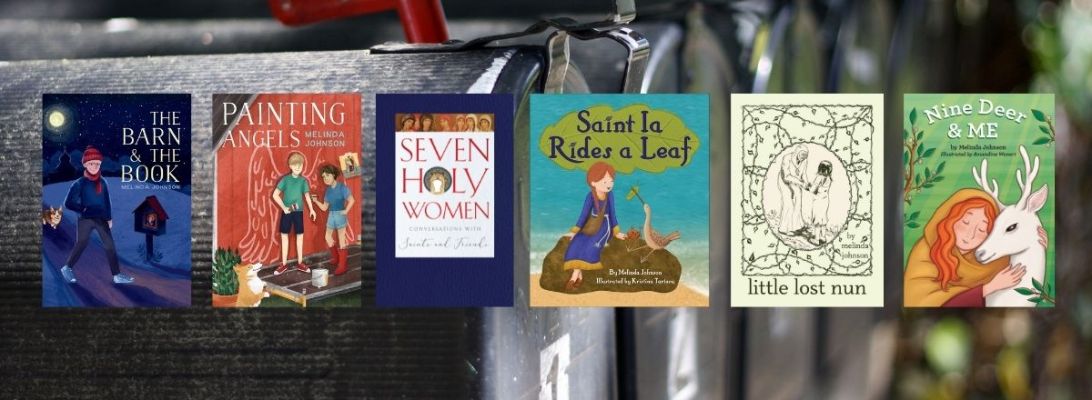
Sam wants to know if animals (especially Saucer!) can speak at midnight on Christmas Eve. Grace and Macrina are competing to write a story, and Elias is losing his patience. Meanwhile, Sister Anna hopes God will rescue her from teaching Sunday school. Christmas is coming, but hearts are full of secrets and frustrations. The Barn and the Book is a story about the traps we build when we try to see in the dark. We tumble into trouble and confusion on our own, but God can steer us clear of our traps and shine His kindly light into our darkness. A chapter book for ages 7-12. Book 2 of the Sam and Saucer series.

6 copies

What happens when you can’t get away from the person who drives you craziest? Sam and Macrina are about to find out. Stuck working together to help the nuns, Sam and Macrina come up with a thousand reasons to disagree. Sam is too rude. Macrina is too bossy. Summer at the monastery will be miserable if they can’t find some common ground. With the help of three friendly nuns, a runaway bunny, and Saucer the trusty corgi, Macrina and Sam discover a big secret that helps put them on the road toward peace. A chapter book for ages 7-12. Book 3 of the Sam and Saucer series.

0 copies – all taken

Written by a group of friends, ​Seven Holy Women​ is a one-of-a-kind journey into the lives of seven women saints. Each section of the book includes a story from one saint’s life, told vividly and imaginatively in the second person; additional information about the saint to give her context; a reflection on ways the writer, reader, and saint intersect on their journeys; personal surveys for the reader and a friend to complete; and a journal prompt that encourages the reader to explore and document her encounter with themes from the saint’s life. Created as both a deeply personal and enriching communal experience, ​Seven Holy Women​ speaks directly to the reader, drawing her into the lives of seven saints as it invites her to look more closely and lovingly at her own spiritual journey and her friendship with the cloud of witnesses.
0 copies – ALL TAKEN

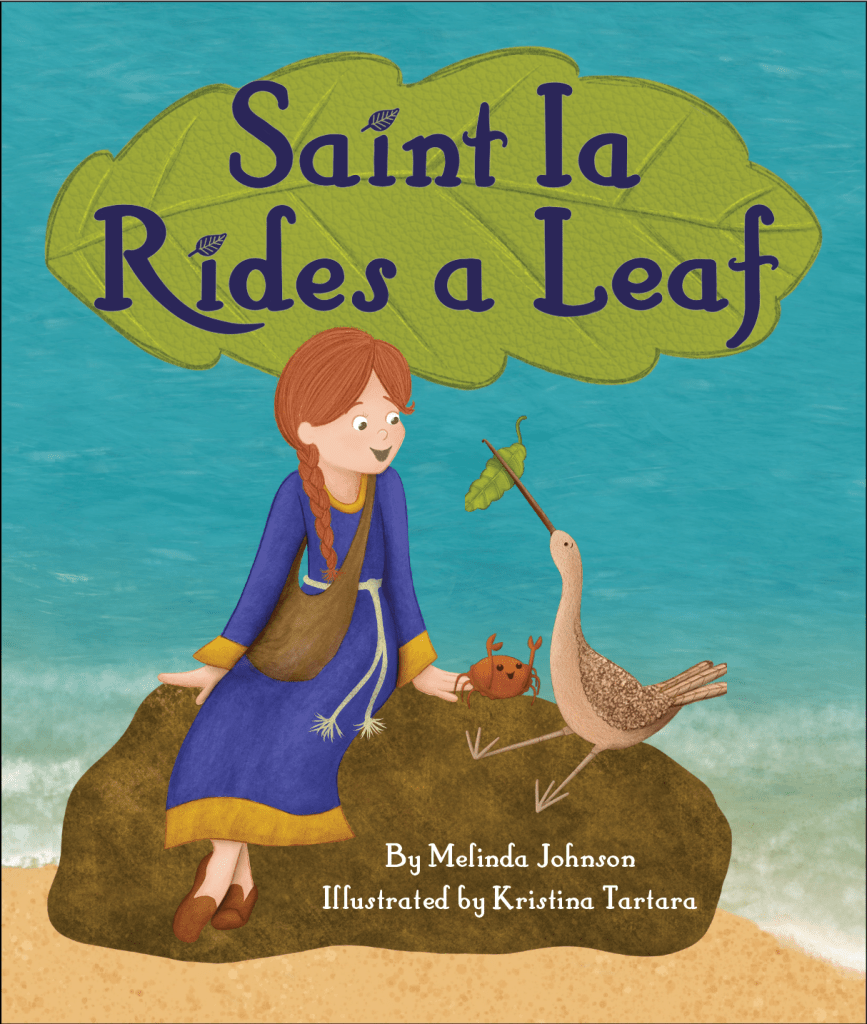
Saint Ia Rides a Leaf is a charming story from the life of Saint Ia, an Irish missionary to England in the fifth or sixth century. The town and parish of St Ives in Cornwall, England, are named for her, and she is commemorated on February 3 in the Eastern Orthodox Church. Join Saint Ia and her animal friends on an adventure to spread the Gospel! Board book for littles.

0 copies – ALL TAKEN

How can one little peg doll have the power to heal two broken-hearted girls?

What happens when you do the wrong thing for the right reason? In this relatable story of the restorative power of friendship, two girls – Nina, who has everything, and Tabitha, who has almost nothing – find the strength they need to heal from a very sad day with the help of nuns both little and life-sized. Chapter book for ages 8-12.

0 copies – ALL TAKEN

Abigail is happy on the island of Inisheer, but God has other plans for her! An angel asks Abigail to search for nine white deer in the woods across the sea. When she finds them, Abigail will also find the place where God wants her to be. Journey with Abigail as she listens to ONE angel, sails with TWO fishermen, finds THREE deer, then SIX, then more! Count with Abigail all the way to her true home. Board book for littles, about Saint Abigail.

BOOKS FROM OTHER AUTHORS
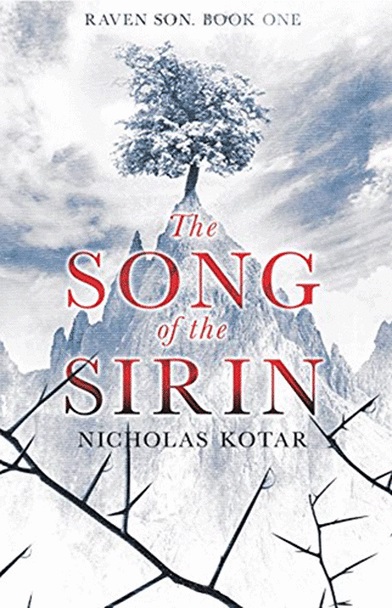
0 copies – TAKEN

The Song of the Sirin is an epic fantasy retelling of the Russian fairy tale “Prince Ivan and the Grey Wolf.” It is written in the tradition of the classic Christian fantasy of J. R. R. Tolkien, C. S. Lewis, and George MacDonald.

An evil omen clouds the sky. A song of lore returns. Can one man’s quest save the world?

Voran can’t help but believe the rumors. As blight ravages he countryside and darkness covers the sun, the young warrior of Vasylia hears of an ancient spirit that devours souls. He feels powerless to fight the oncoming devastation until an angelic creature entrusts him with a long-forgotten song. Legend has it that such a song can heal the masses, overthrow kingdoms, and raise humans to the divine. . . .

Armed with the memory of the song, Voran must hunt down the dark spirit before it achieves its goal of immortality. His quest takes him through doorways to other worlds and subjects him to ordeals against seductive nymphs and riddling giants. Voran’t journey is a trial—of faith in a world of doubt, love in a world of selfishness, beauty in a world of ugliness.

With each step of the journey, the strength of the villainous spirit grows, as does Voran’s fear that the only way to save his world is to let it be destroyed.

0 copies – TAKEN

Are you looking for a way to keep your family engaged in the true spiritual nourishment Lent has to offer? Tending the Garden of Our Hearts offers family devotions based on the scriptures for each day of Great Lent, including questions to discuss and ponder and an appendix full of hands-on activities to bring the lessons of the season to life. Whether you use it every day or dip into it occasionally as time permits, this book will help the whole family get more out of this crucial season of the Orthodox year.
Little Lost Nun in England

This review of Little Lost Nun comes from Anna-Maria. She is 10 years old, and she lives in Oxford, England. Here she is reading the book with her dog, Dodger.

Reading in the garden with Dodger

Anna-Maria writes:

Little Lost Nun is a book about feelings, actions and prayers. You can see how what the characters do relates to their feelings, and relates to what their personal experiences were and are in life.

It makes me think more about my actions and forgiving people who have done something wrong.

It makes me think about how prayers can be answered. God hears them but you can’t always tell that they are being answered.

The story is misty. You don’t know what’s going to happen next. At the same time the story is bold. All the characters are different from each other and I can imagine them very clearly.

It’s a really good book. I like it. At the end I turned the page to see if there was more. I was hoping there was.

#littlelostnun #summerofthelittlelostnun

Clever Myths and Eyewitness Accounts

“For we did not follow cleverly devised myths when we made known to you the power and coming of our Lord Jesus Christ, but we were eyewitnesses of His majesty.” 2 Peter 1:16

This verse is part of the Epistle reading from this morning’s liturgy for the Feast of Transfiguration, and it sparked a shower of ideas I feel are directly related to my ongoing study of Orthodox children’s literature.

If you read my post from yesterday (7 Serious Questions about Orthodox Children’s Books), you know I’m studying Orthodox children’s literature as a genre, a mission, a product, an experience – everything about it that I can learn and ponder. This research quickly touched on another ongoing quest of mine, to envision and create truly faithful, truly literary work. It’s possible the principles of this effort are fundamentally the same, no matter the age of your expected readers.

But what struck me with such force in this Bible verse is the question of clever myths and eyewitness accounts. At first glance, you’d think that was a reference to fiction and non-fiction, wouldn’t you? And that is true in a literal sense. Peter is explaining to his readers that he didn’t make up all that stuff about Christ. It happened. He was there and saw it.

Hold that thought.

TWO CATEGORIES OF CHRISTIAN FICTION

In my observation, “Christian fiction” can be divided into two categories: books about people “being Christian” and books in which the inherent Christianity of creation shines forth. These two characteristics aren’t mutually exclusive in their natures, but they don’t often appear together. There are plenty of instances in the human attempt to infuse faith in fiction in which the agenda left no room for anything to shine, not even the writing. It strikes me now that while immature literary skill is certainly a factor in such cases, lack of faith might be the greater fault.

I don’t mean that the writer is not Christian enough to write well. Not at all. I mean that the writer, perhaps unconsciously, assumes that the reader won’t see the truth, won’t be converted, unless everything is blatantly spelled out. The reader must be convinced by the writer. Persuasion must occur, and the more urgent your personal conviction, the harder it is to trust persuasion to anything but your own arguments.

PERSUASION AS FAILING FAITH

This reflects a two-fold faithlessness, in my view. First, it assumes that the reader is not intelligent enough to detect or appreciate nuance, or symbolism. When the murderer makes a point of turning off the lights so he can commit his foul deed in darkness, the reader won’t realize that spiritual darkness is also indicated. Are our readers actually so dense? Do they really need us to explain everything we’re doing? Do we need to hear them say, “I see what you did there”? I doubt it.

In fact, I believe readers bring a wealth of meaning to our words, drawing on their own thoughts and memories. The author is not the only one able or likely to infuse a text with meaning. We give birth to our stories, but their lives extend beyond us when we send them into the world. Like children, we must let them grow into the life God made for them, even when they travel beyond our horizons, even as we acknowledge we’ll never know all the people who read them, all the ways they’ll be misread, reconstructed, and understood.

Bringing the Man Downstairs

The second faithlessness of the over-explained Christian novel is the assumption that God is not everywhere present, filling all things. I’ve recently encountered fascinating scraps of the “re-enchantment” discussion swirling in theological, literary, sociological, and other circles. The primary value in the conversation, to me, is the startling reminder that God IS everywhere. Several years ago, Fr. Stephen Freeman wrote a book called Everywhere Present: Christianity in a One-Storey Universe, in which he takes on the worldview behind calling God “the man upstairs.” The man UPSTAIRS. Not the man down here with us. Not a presence in the air and earth and human life around us. The man somewhere else.

We enable a seismic shift in Christian literary art, for children and adults, when we bring God back downstairs. DO you believe God is EVERYWHERE present? Then you will be able to write Him into your fiction simply by manifesting the patterned loveliness of His works. Metaphors work because God is downstairs. Symbol is inherently, intrinsically spiritual. It’s our second language, the code of our invisible dimension, and God made it and speaks through it. With His merciful grace, sometimes we can, too. Sometimes, with sweat and prayer and those holy, euphoric bursts of inspiration, we can write the story of realization, our small visions of the miraculous reality.

And that’s why in 2 Peter 1:16, I see an affirmation of well-made Christian fiction. The father of lies will always provide us with clever myths, and his myths may masquerade as light. But fiction crafted from keen awareness of that magnificent Presence? That kind of fiction needs only symbol, finely observed, to become an eyewitness account.

7 Serious Questions about Orthodox Children’s Books

The database of Orthodox children’s books in English and currently in print now has over 200 entries. In addition, there are catechetical resources available from archdioceses and other organizations that are not included on the list because I see them as a separate genre. For the moment, I’m not studying curriculum. I’m not qualified to do so, and my primary interest is kidlit. But I qualify that with my strongly held belief that children learn from ALL books, not just the ones adults consider educational.

Research philosophy

Right now at work, I’m researching various aspects of Orthodox children’s literature. It’s a thought-provoking adventure, let me tell you. Questions arise at every turn, and there are moments when I struggle with the wild urge to know everything and fix everything immediately! But as my mama used to tell me, the only way to eat an elephant is one bite at a time. I’m not the solution to everything, and it’s important to remember that people are different. What one person perceives as a flaw is a great strength in the eyes of someone in other circumstances.

Regardless, I believe it’s important to raise and ponder each question. Orthodox children’s literature as a genre is relatively new and still inventing itself. It’s not a field in which you can earn a degree or any kind of standardized credential. It’s still subject to widely divergent opinions, amateur efforts, the absence of substantive data on its efficacy, and the urgency of love – love for the faith and its children and the urgency of their need as an underserved minority in a complex cultural landscape.

Therefore, I offer 7 questions for your consideration. There are others, but in my view, these 7 are starting points for reflection and discussion. You’ll realize quickly that not one of them has a simple answer.

7 Questions

1 – Who is the “customer” for a children’s book: the parent buying it or the child reading it?

2 – Do we hold Orthodox children’s books/curriculum to the same standards that we have for secular children’s products?

3 – Are we evolving from what you might call “informational” catechesis to experiential catechesis, or aren’t we? What’s going on with that and why?

4 – Why is fiction such a complicated thing? Are we able to conceive of children’s fiction as both Orthodox AND engaging? Can we only see or trust faith in fiction if it is OVERT?

5 – I suspect question 1 and question 4 are linked. What do you think?

6 – What do children learn from the ways we create and interact with their “church books”? What are we telling them about their faith that we may not realize we are telling them?

7 – What besides books are/should/could we be creating? What other media might also provide entry points to faithful, imaginative, loving encounters with a child’s spirit?

Share your thoughts

My research is ongoing, and I value glimpses of as many perspectives as are offered to me. If you’d like to share yours, use the Contact form and get in touch!

List of Orthodox Christian Children’s Books

I was thinking of writing an article encouraging homeschool teachers to include at least one Orthodox children’s book in regular language arts curriculum each year. This led to the idea of making a list of children’s books by grade level. And that led to my best effort at compiling a master list of Orthodox Christian children’s books written in English and currently in print.

No doubt I’ve missed some. The world is a big place, and so is the internet. It wouldn’t be hard for a little Orthodox book, or even a little publisher, to escape my notice.

This list will need constant updating if it is to become a lasting and useable resource. But it is at least a beginning.

CLICK TO SEE THE LIST.

The list is housed in a Google spreadsheet. At this writing, there are 182 entries, and I am aware of at least 6 more titles that will release before the end of 2021. That’s a lot of books!

The spreadsheet makes some attempt to include notes on what’s in the books, what they could be used for in a Sunday school or homeschool classroom, or for family reading. That part is very incomplete for the simple reason that I’ve read or even seen only a fraction of these books.

TRENDS I NOTICED

Without reading every book on the list, my insights are limited. Based simply on the covers, blurbs, and other readily available details, I noticed several things.

1 – The number and quality of Orthodox children’s books appear to have increased greatly in the last 10 or so years.

2 – Orthodox children’s literature is largely catechetical.

3 – Fiction is rare.

4 – Books of any kind for older children are rare.

5 – The quality and style of illustrations varies widely.

6 – Board books are relatively new in this market, but they are popular and more are being published.

WHAT I THINK

People want good books to support their children’s faith. The number of newer publishing houses and their offerings suggests an active effort to fill the holes for this market. The larger Orthodox publishers in the United States have expanded and improved their children’s line in the last decade. Also, with the evolution of technology and publishing resources, smaller companies can form and produce professional-quality books for niche markets in ways that were not possible in the past. I saw some books and companies I felt were a direct result of this evolution. This is encouraging. I love to see people spend fruitful effort on what matters to them.

One question kept recurring to me as I worked on the list. How many of these books would a child read spontaneously? Are these books children would choose for themselves? Are we simply producing the kind of book an adult makes you read?

On the one hand, there is nothing wrong with reading books you were told to read because you need to learn the information they contain. This is a healthy life-long discipline we should acquire as children. Every aspect of our spiritual life can sometimes require self-compulsion, and the care and love that has gone into creating the books on this list make them accessible and valuable.

That said, I freely admit I was a child best reached through her imagination. Even as an adult, I often find myself most drawn to things I’ve encountered first in fictional settings. Stories are the way I find and remember meaning.

The books I’ve written for children are all either fiction or creative non-fiction (for example, an incident from the life of Saint Ia, told imaginatively in simple language). I don’t feel qualified to write instructional non-fiction.

I say these things to be clear about my perspective. In my mind, the height of excellence in children’s literature is achieved when some great truth shines directly into a child’s heart through a beautifully crafted, genuinely engaging story. In that context, the distinction between what is and is not Christian literature fades. If you are a Christian wherever you go, you can encounter and ponder your faith in fiction as well as non-fiction.

I know not everyone is like me. I know that many child THRIVE on non-fiction reading. I believe Orthodox children need and want more of every kind of book. When you consider how many secular books a child can read in the course of a childhood, 182 Orthodox books is not many at all.

For my part of the effort, this list urges me to keep working on Orthodox-infused fiction for children. It’s a craft that takes practice. A weak story wobbling under the weight of a catechetical agenda accomplishes little. God grant me strong stories that carry something essential with love and grace.

#SummeroftheLittleLostNun – Sister Mary and Nun Anna

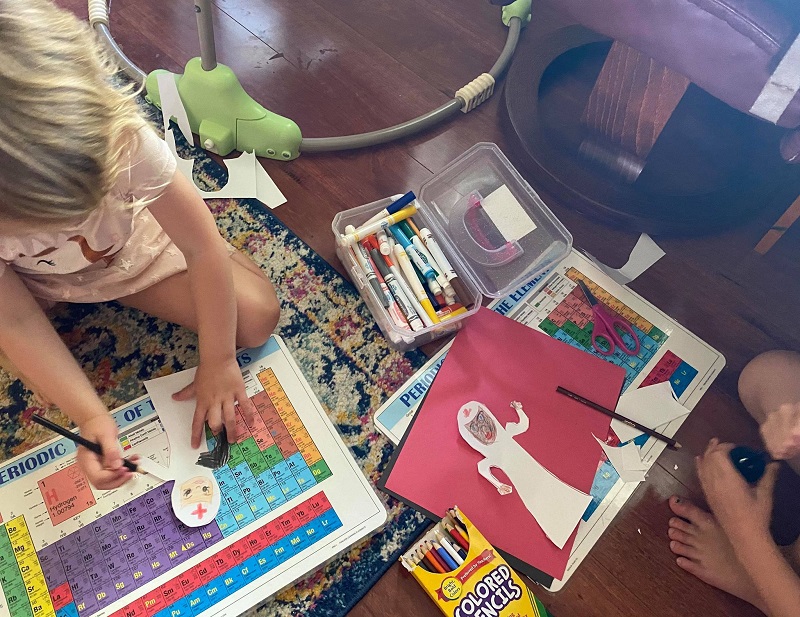
With great joy, let me introduce you to two little nuns and the little girls who made them. The nuns began life on a summer day, on the carpet with markers, colored pencils, and two fascinating copies of the Periodic Table of Elements.

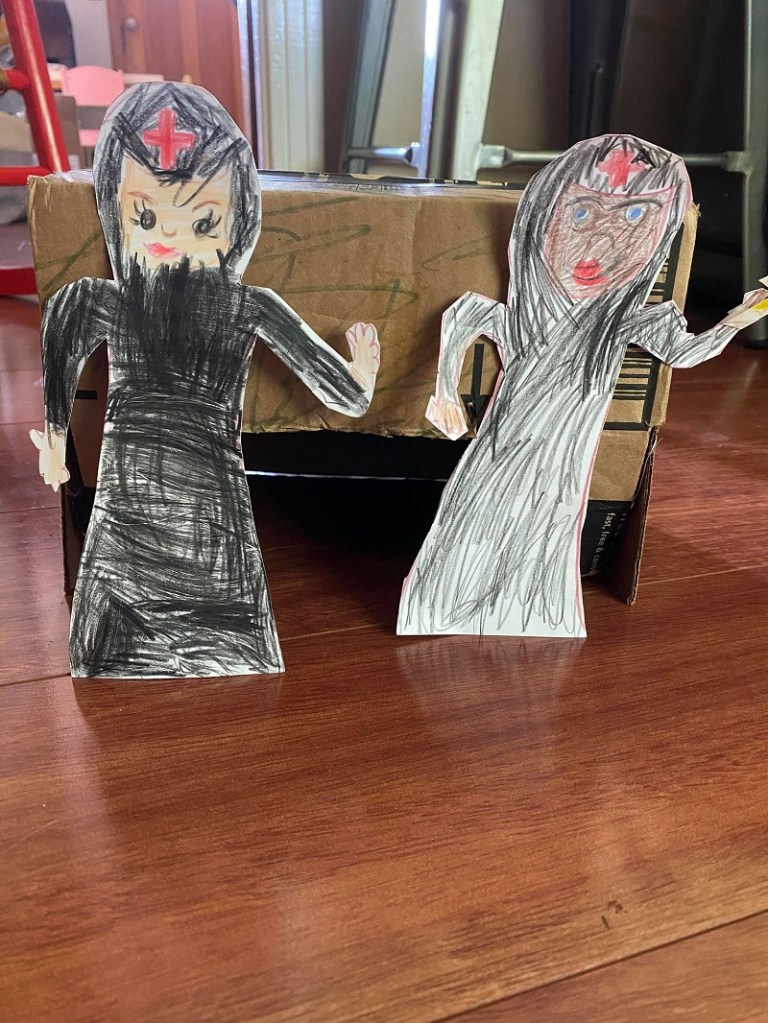
This is Big Sister and Nun Anna.

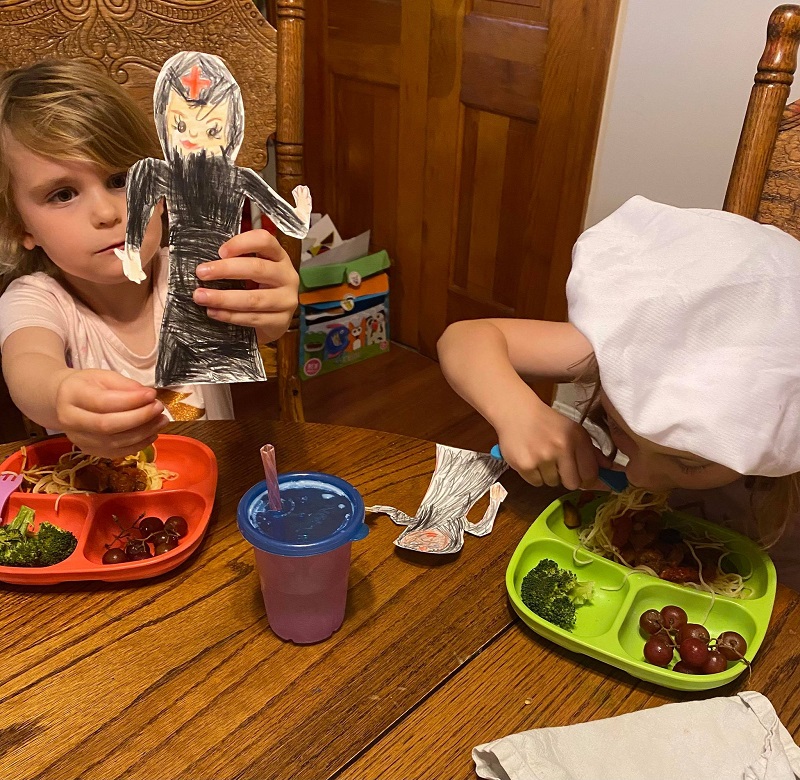
And here is Little Sister holding the nun she made, Sister Mary.

Big Sister built a church for the nuns, so they would feel at home, and Little Sister found icons of the Holy Apostles and Saints Cosmas and Damian to put inside it. Here are Sister Mary and Nun Anna on their way to pray.

Outside the little church…
Inside the little church

Sister Mary and Nun Anna spent a wonderful day with Big and Little Sister. They ate spaghetti, and it is very likely they also ate their vegetables. Nuns do eat vegetables.

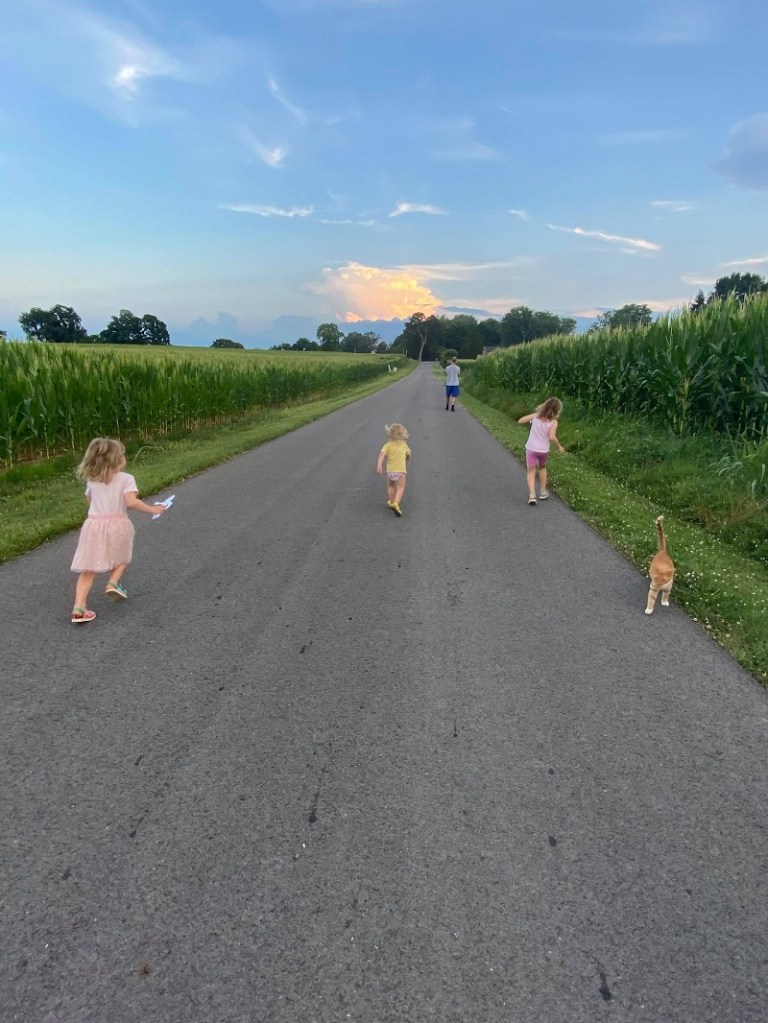
Sister Mary and Nun Anna took the girls on a walk by the corn fields. The sunset was beautiful, and the dandelions were fluffy.

Before bedtime, they visited the bee garden. Nuns like bees and gardens, and you will often find both at a monastery.

Nun Anna visits the garden…
…and probably blesses the flowers.

There was just time for a quick ride down the slide and a good-night pat for the cat.

Wheee!
Good night, Cat!

Thank you, Big and Little Sister, for making and sharing Sister Mary and Nun Anna! This will remain one of my favorite things that happened during my time on this planet.

If you would like to make your own little nun and share her adventures, you can find the directions HERE.

#summerofthelittlelostnun #littlelostnun

Make your own #littlelostnun and share pictures!

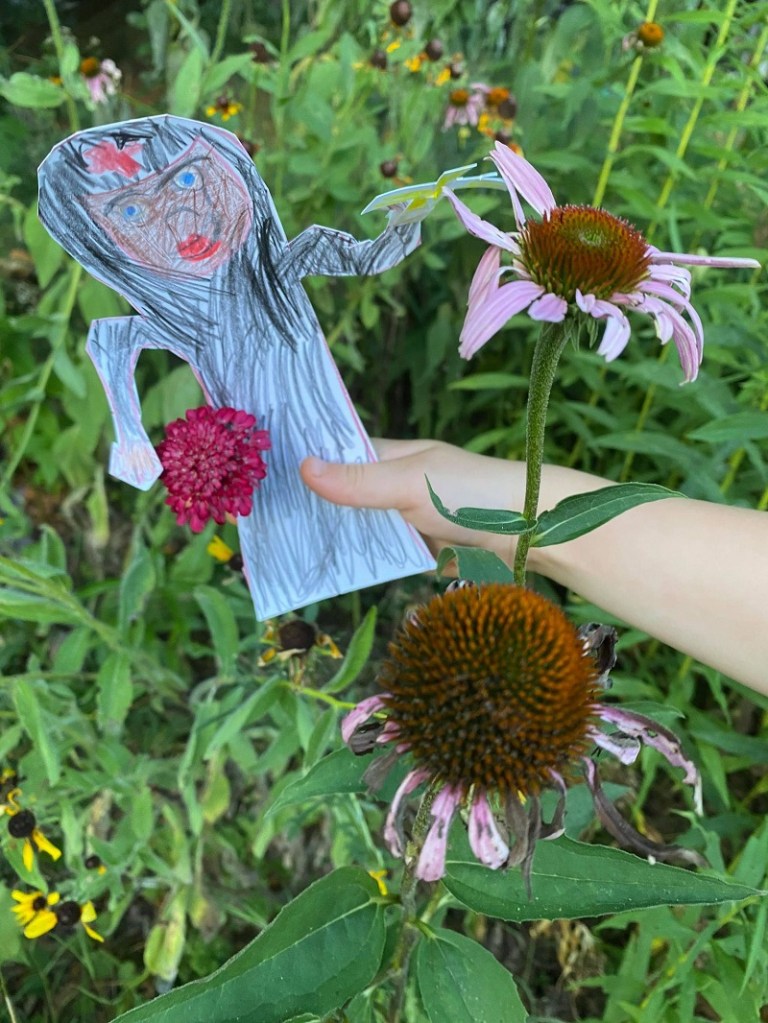
Today, I joyfully announce the #SummeroftheLittleLostNun! Together with Park End Books, I’m inviting children (and grown ups) to draw their own little nun and share pictures of where she goes. Does she go to church with you? On vacation? Is she playing near the creek (don’t fall in, little nun!)? Maybe yours will enjoy the garden. Mine does!

#littlelostnun in the flower garden!

Making Your #littlelostnun

You are very welcome to draw your own nun, paint one on a clothespin, or sew one out of felt or other fabric. Variety is one of the great beauties of creation, and I hope to see variety in these little friends. If you need an outline to get you started, Jack Naasko (an artistic friend) kindly created this downloadable template. Color it in, cut it out, and let the adventure begin!

#littlelostnun goes traveling

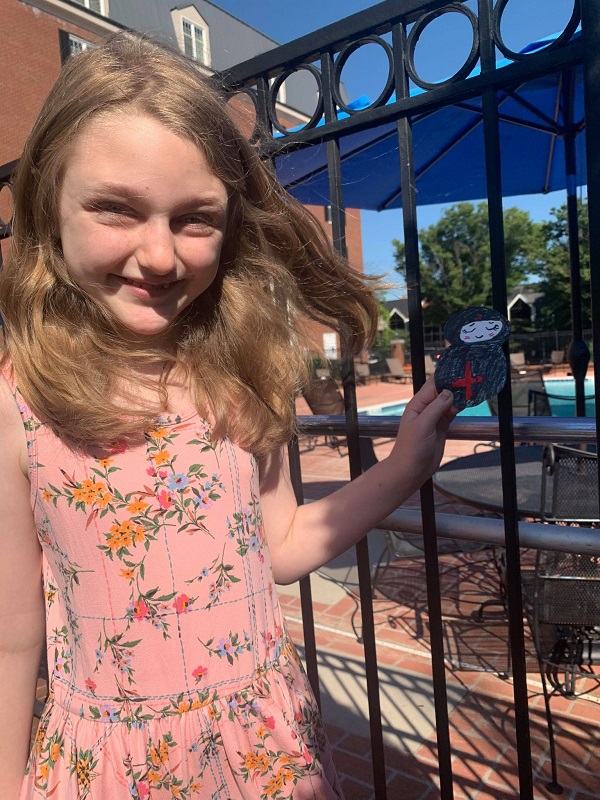
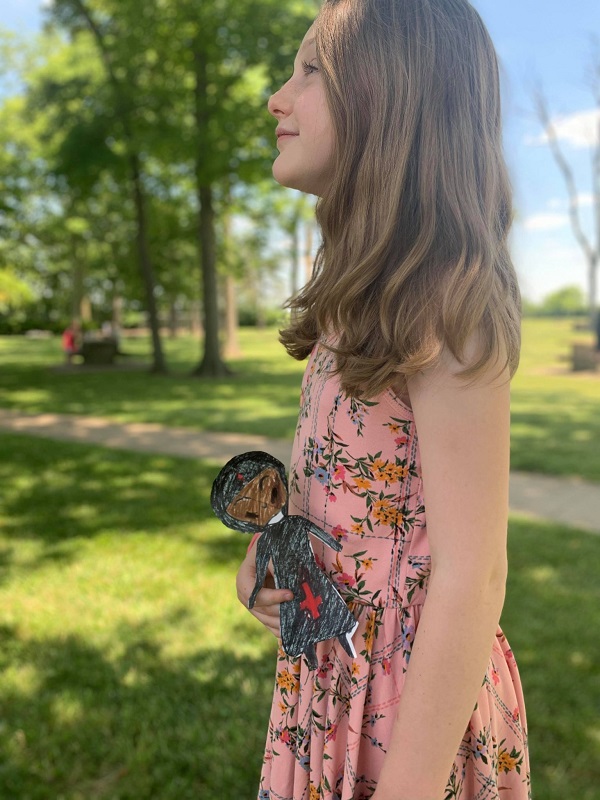
Some friends of mine were traveling recently, and they created little nuns on the road! Here they are, the first people (and nuns!) to participate in #summerofthelittlelostnun !

Just looking at these pictures makes me happy!

How to participate

Everyone is welcome to join in! Here’s how you do it.

1 – Make your little nun. Draw your own or use the template.

2 – Take her on adventures. Take pictures of her wherever she goes!

3 – Share your pictures, and use the hashtag #summerofthelittlelostnun so that everyone participating can enjoy them. You are also welcome to send them to me. I will be publishing as many as I can on this blog! Use the contact form to get in touch or find me on Facebook.

4 – Another reason to send in your pictures? Park End Books will be offering a 10% OFF coupon for everyone who participates.

I can’t wait to see your pictures! May the #littlelostnun find herself in many good places, with good friends!

#littlelostnun #summerofthelittlelostnun #littlenuntravels

Flying!

REMINDER: Little Lost Nun is available for pre-order from Park End Books, separately or together with the limited edition Little Lost Nun Peg Doll! This book releases in August 2021!

Illustrating Little Lost Nun

My heart is FULL of joy. Below is a photo the publisher sent me of the final front cover printed out on real paper, so I could see it “in real life.” It’s one of several ways the publisher and illustrator have led me and my story more deeply into the human experience.

Cover spread, Little Lost Nun

Today, by the grace of God and Summer’s excellent gifts as a book midwife, Little Lost Nun is available for preorder. I hope you will take a minute of stillness to look at the two human beings in the picture above. Look at Gerontissa’s face, and the way her whole being yearns over this little girl. And look at Tabitha, who has almost nothing, clasping her first and greatest treasure in her shaky little hands.

And this is Nina, the second protagonist from Little Lost Nun. Here you see Nina’s mama comforting her at the end of a sad day.

Nina in Mama’s arms

And…

That makes this a picture of Black Americans as main characters in an Orthodox children’s book.

I credit the editor, Summer Michelle Kinard, and the illustrator, David Moses, with the final conception of Nina and her mama, and of Tabitha on the cover image above. In my mind’s eye, they were smaller and farther away, their color and experiences made slightly vague by their continued existence in my imagination. It’s an odd thing to say, but I feel David read and drew the story in the present. He would. It’s the perpetual mystery of illustration that no one sees back into the author’s imagination. The artist depicts only what he reads.

But I did know that for this story, I wanted the little girl who was brown to be the one who had everything, the one standing for normal, joyful life, not the one in need of rescue. And I wanted that to be true without the book being “about race.” Little Lost Nun is not about race. The character descriptions just tell you what the people look like.

Although I welcome the intention and effort that goes into making children’s books more diverse, I especially look forward to the day when we no longer do that “on purpose.” Sooner or later, all kinds of people will appear in children’s books because that’s how we see the world, not because we carefully included one of each kind. Sooner or later, we’ll reach the point where brown skin in a book is not always a plot point or a mission, not the main reason the story is told. That will be the day we’ve accepted the many skin colors God gave us. It will be the day we can give brown children books about brown children because the story is good, not as a way to support them in their otherness.

Perhaps that will never happen. But I’d like to remember it as a possibility.

#littlelostnun

#TeachersTalkKidLit – Nancy Parcels

What makes a book a good book? This is something that I have been asked several times by other people and that I have even asked myself.  Having an 8 year old son we have done TONS of read-alouds.  We have had many successful read-alouds and many books that we could only read a few chapters and then we needed to abandon the book and move on.  Why? What made the books that we couldn’t put down a book that we wanted to keep reading?  For us it was a few things.  

RELATABLE

First, the book was relatable in some way.  They were either books about a boy the same age as my son, they had similar interests or were of the same faith.  My son could connect to the character with their struggles, hobbies, or strengths.  This is why we LOVE books that give lots of background information about the main character.  The more my son knows about the character’s likes, dislikes, religious background, hobbies, dreams, or aspirations, the easier it is for my son to want to continue reading to find out more.  

INTERESTING VOCABULARY

The second concept that makes a book a good book for us is unusual or uncommon language.  The more the author uses rare language, the more my son gravitates towards that book.  What I mean by unusual or uncommon language is that it may use words that we don’t hear anymore, like Old English or slang words from different eras.  It produces images and discussions that usually surpass my imagination.  Even books that are Orthodox faith-based books that use vocabulary that may seem advanced for the target age cause wonderful discussions and learning opportunities. 

IMAGERY 

Another way to keep us enthralled with a book is imagery! The more descriptive words used to tell us what is going on with the scene, the better.  It gives my son the opportunity to feel like he is living the book.  Giving the reader the full scope of the scenes gives them the chance to feel like they are standing right next to the characters, seeing the scene play out right in front of them.  We have even read a few illustrated classical reads that don’t have pictures on each page, but the pictures it does have are so detailed that the questions, conversations, and thoughts that it provokes are amazing.  

LESSONS

Finally, we love books that have a lesson learned by the main character.  It can be about anything really.  We have read books on our Orthodox faith, friendships, trusting in God, believing in oneself, etc.  While we read the book, we can have great discussions about what we would do differently or what we think will happen to the main character.  Following the character in their journey helps feel like we are a part of them.  Also this helps tie in having something to relate to and imagery.  Having something that we need to follow along closely with means that we need background information. 

Parent choice vs. child choice

I wanted to touch base on books that I would pick out for my child compared to books he would pick for himself.  The books that I pick for him are usually books that I found to have the content that I am trying to teach.  It could be books that are for our history time period or religious teachings.  I also like to make sure that the books have good written language.  I prefer books that do not have new slang words or inappropriate grammar or language.  If I am using a book to teach or reinforce what we are learning, I also want to make sure that the book is giving accurate information.  Now, the books that my son wants to choose are the complete opposite of what I choose.  He likes books that have tons of pictures, slang, and little to no history.  My son loves graphic novels and what I like to call “silly” books.  That is why when I am reading aloud and picking books that he would normally not choose for himself, I try to find books that have something in there that he likes or I make each character have their own voice.  Just something to keep his attention and keep him interested.  I will also try to keep asking him questions throughout the book to keep his attention or go over something he didn’t understand.  

About Nancy

Hello! I am Nancy Athanasia Parcels.  I am an Orthodox home-educating mom.  I have been home-educating for 6 years.  I have also tutored in Math and Reading on and off for 20 years.  I have taught in a Montessori Homeschool Co-op for several years.  We have switched to a classical home education for the last 3 years.  I have taught for 2 years so far at our current co-op.  I have also worked in a library as a librarian assistant in the children’s section for several years.  I have been married to an amazing Chef husband for 11 years.  We have one 8-year-old son and another son to make his arrival in a few short weeks.  We live in South Carolina where we enjoy nature, family time, learning from each other and reading aloud.