Wishful Thinking on Independence Day

Close up of the American Flag

On this 4th of July, I am pondering the complexity of military service and national identity. As with many human conditions, the outward show of military life is a fraction of its meaning. Because they are the “instruments of foreign policy,” service members are held up as symbols of what is most loved and hated by proponents of various ideologies in our country. They live on the receiving end of assumptions that are more often based on emotion than information.

The crux of military service is an existence that would be unnecessary in a perfect world. Armed forces are the painfully tangible proof that human beings do not treat each other as they should. Many would argue that July 4th is not a military holiday. It is the commemoration of our birth as an independent nation. At some level, we all rebel against the idea that this independence is impossible without military force.

Military life teaches you to engage what IS. You won’t last long clinging to what you WISH would be. Military life is predicated on the understanding that you control far less of your reality than a civilian does. But it also reveals the truth that civilians control far less than they wish to. If I have learned nothing else, I have learned that evil is both totally unnecessary and extremely powerful. Stand in that space for a few minutes today – the space in which you know that evil could be stopped if enough good choices were made, and in which you also know that actual human beings, many of them, would rather die than make those choices.


Photo by Samuel Branch on Unsplash

Mercy and Complexity

One of the blessing curses of being a writer is the refined ability to step inside another character’s worldview. You do this so that you can write the character, but the longer I live, the more my brain tries to hop worldviews in real life. To do it well, you must be able to envision motives and emotions for an identity completely separate from your own. But, especially if you’re going to do it in real life, you must complete the exercise without falling into the trap of believing you can actually read another person’s mind.

Although there are genuinely malicious people in the world, I don’t believe they are the majority, or even close to it. Most people, no matter how wrong-headed they appear to their peers, believe there is a valuable or at least necessary reason for their choices. If you are writing this wrong-headed person, or pondering them in real life, you will quickly discover that perception and empathy create confusion.

What’s the first dysfunctional human situation from your own life that springs to mind? (Don’t raise your hand or shout it out. Just think of one.) If you climb out of your own position in the situation and walk around the table, so to speak, it will become harder and harder to decide who is the “good guy” and who is the “bad guy.” It seems to me that the core of our human judgment of other humans rests in whether we think they meant well. Were they trying to do something they thought was good? Were they trying to do harm?

Our cultural paradigm is to solve or explain a situation by identifying a protagonist and an antagonist. We can then support the one and the condemn the other with an easy mind.

But the more you seek the details of human psychological and spiritual complexity, the more difficult it becomes to decide who is the antagonist. “There is no one who lives who is without sin.” We are all antagonists. But all creation is lifted up in Christ. We are all protagonists.

This is not an argument for relativism. There are good acts and evil acts, good motives and evil motives. But we have lost our desire or ability, as a culture, to accommodate the presence of spiritual tension in everyone around us, and in ourselves.

Perception, empathy, justice, mercy – all of these open us to unwanted depths of meaning and accountability. We are too tired and frightened to be attracted by the chance to understand and care for each other. And our weariness and fear are strengthened every day by the failure of our peers to understand us and care for us. That is the cycle that wants breaking, in my view.

-Photo by Akshay Paatil on Unsplash

Acts 16 Now and Then

Close up of metal chain hung across a pillar in a dark room

In one of those turns of thought that sometimes open like a door, I wondered this morning how the Philippian jailer and his conversion in Acts 16 might have been greeted if he were to try baptizing all his household today.

Then [Paul and Silas] spoke the word of the Lord to him and to all who were in his house. And he took them the same hour of the night and washed their stripes. And immediately he and all his family were baptized. Now when he had brought them into his house, he set food before them and he rejoiced, having believed in God with all his household.

This is not the only time when an entire household was baptized. Just a few verses before this story, Lydia of Thyatira is baptized with all her household. As a successful business owner, her household likely included servants or slaves. The jailer’s family doubtless included a wife and children. In the modern instance, wouldn’t our first question be whether the central convert had imposed a chosen faith on a collection of dependents who had not chosen it?

Verses such as these are part of the argument for infant baptism, indicating a precedent whereby the “age of reason” or even basic egalitarian agency seem to be missing from the decision to become Christian. What can we make of that now, surrounded by voices declaring that everything, absolutely everything, should be a choice?

Today’s secular western culture would object to this baptism hastily and heartily. Did the jailer’s wife want to be baptized? Did he ask her? Even if he did ask her, did she really feel free to object if she wanted to? Were Lydia’s servants actually converted, or did they receive baptism in the same spirit as they received the roof over their heads and their inability to leave it of their own free will?

Little, if anything, is known about the actual historical people in question. We don’t know even the jailer’s name, let alone the identity of his family members, and Lydia’s household is equally cloaked under thousands of years of lost information. We can’t know what they thought, or why. Speculation is all that remains to us.

Thus, I speculate that this question of consent and freedom is wholly modern. And that it is modern not simply because, at least in the secular west, we no longer own slaves, we allow women to vote, and far more decision and intelligence are attributed to children now than may have been then. (One could argue that we attribute less to them, as they are boxed into a supervised and regimented existence long after their ancient counterparts would have been able to fend for themselves on the streets. But that is a topic for another day.)

The question of whether it was fair for the jailer, Lydia, and others to baptize their entire households is modern because it is based on a modern understanding of religion. Religion now is a legal right, a choice, an act of self-expression, and something considered safe to choose or not choose for oneself or others. In the time of Acts, religion could hardly be called by that name at all. It was almost a default – a powerful, expected force, something no one could or did imagine the world without. The idea of choosing a religion was more a question of whether you guessed right, whether you safely attached yourself and your loved ones to the real God, the right God, the God who could protect and save you and was attentively considering your every move and responding accordingly.

Seen in that light, God was as vital and ordinary as food or water. Stunned and convinced, the jailer would no sooner have decided to convert by himself than he would have chosen to provide any other necessity only for himself, while his household languished and died in want.

It reminds me, surprisingly, of an old Peter, Paul, and Mary recording of a folk song called, alternately, Bahamian Lullaby or All My Trials. The speaker in the song is a mother on her deathbed, comforting her children by reminding them that her suffering will be over soon, and that the Tree of Life and paradise are awaiting her. The religious imagery seems odd to me for a song that became popular in the 1960s, when perceived conventions of every kind were overthrown. Yet there it is. And in this song is a line that speaks directly to the jailer and his family, and Lydia and her household.

“If religion were a thing that money could buy, the rich would live and the poor would die.”

If the jailer, the male and the wage-earner for his family, the only member with something approaching power, were to hear the Gospel and keep it to himself, it would not be a sign of respect for his family’s liberty or self-expression. It would be an act of selfishness, even cruelty, and a direct violation of the generous Christ he had so newly embraced.

This is what we have lost, I think. There is much of the old world that deserved to die, and perhaps nothing more so than slavery and oppression. But in our striving to avoid those old wrongs, we have formed the habit of avoiding too many other things besides. We are frightened of conviction, wary of acting on behalf of anyone but ourselves. It’s as if we no longer trust discernment, or truly believe there is anything beyond the tangible to discern. If everything is personal and relative, our sense of rightness, our faithfulness, somehow becomes a flaw.

Can we even imagine that moment of conversion? Could we step into the wretched prison and hear the hymns? Would we survive the earthquake and the suicidal urge to destroy ourselves before the destructive judgments of our peers can do it for us? What shattering beauty must have been his as the jailer risked his life to bring these prisoners home and bathe their wounds. The world as he understood it up to that point had ended. He had no precedent for men who praised God in shackles, who stayed when they could have escaped, and who offered him salvation when vengeance would have been understandable, even expected. He himself was likely outside the limits of his own imagining. If someone had asked him the day before whether he would risk his life to save two hymn-singing prisoners, how would he have answered? Who in his world could even have formed the question?

And so I conclude that our relativity has, ironically, made us rigid, unable, unwilling to peer outside the acceptable rut. It is our courage that suffers most, in this age of judgmental tolerance and litigated freedom. More even than physical courage, do we lack mental courage? Are we still able to conceive that what we cannot accept exists, that it is even possible for it to exist? Are we able to believe that the common judgment of reality is no more final and perfected now than it was when Paul and Silas lay in prison and were free?

-Photo by Daniel von Appen on Unsplash

A Great Light

Hand reaching out of darkness into light

When Hurricane Katrina came ashore on August 29, 2005, my husband was stationed at the Seabee base in Gulfport, MS. The flat, sandy coastline offered no resistance. The little towns along its length disappeared into the surging flood. Trees, cell towers, and whole buildings went down in the wild wind. At nightfall, there was nothing to be seen but hot, wailing darkness.

But the Seabees (an affectionate and honorable term for the Navy’s Construction Battalions) are uniquely qualified to shine in moments of disaster. They are trained to arrive in a place that has absolutely nothing but the ground under their feet and construct an airstrip, a tank farm, a base, a town – whatever is needed for the people who will follow in their footsteps. In a remarkably short time, the Seabee base had power, water, and communication with the outside world, and had begun to send teams out into the surrounding towns to look for survivors and offer desperately needed assistance.

And then?

At nightfall, there was nothing to be seen but darkness….and the blazing light of the Seabee base, the only light in that devastated landscape. People walked miles, hours, through unimaginable destruction, to reach that light. They arrived at the gates, and the Seabees let them in. The officers and troops created towns in the base warehouses, stretching their military protocol and ingenuity to care for the people who came to them, the people who could see their light and responded as human beings in darkness have always responded and always will.

The storm refugees brought nothing but the clothes they stood up with and stories of horror and grief – loved ones torn out of their arms in the flood, houses washed away, hair-raising escapes out of buildings that were filling with water as they climbed out of windows or struggled to free a debris-clogged door. The world as they had known it was taken from them completely in just a few hours. With nothing left, they gazed into the darkness, and when they saw a light, they started walking. It was as simple as that.

I have come to believe that this is the role of the Church on earth. If we are the body of Christ, we are the bearers of that great light that shines on the people who sit in darkness. When nothing else remains, when the storm and the darkness have swallowed every joy and comfort, we are the people who use the tools we have been given to bring the light. We are those who build a shelter, offer nourishment, and honor grief with our hearts and with our sacraments. We are the last and the first, the only beacon remaining and the outpost of the new creation.


-Photo by Cherry Laithang on Unsplash

Inaccessible

Candle lit inside lantern with heart-shaped window

Yes, I saw what happened in Charlottesville. No, I am not being silent and failing to stand up for the right. That kind of silence is not one of my choices. I am a white woman married to a black man. My life is a declaration every time I go out in public and the lights are on or the sun is up.

Except for this: my life is not a statement. It’s just my life. It’s just marriage and parenting and friends and work and grocery shopping. It’s not created or experienced in reference to people who are not participants in it. Continue reading

Beware the Fire Hose

In the age of outrage, it’s important to know the difference between a marathon and a sprint. This is especially true if you hope to be heard by your fellow human beings, and if you hope to galvanize them to action. Whoever you are, and whatever your cause, you must never forget that for all practical purposes, you are speaking directly into the blasting stream of a fire hose. Always. If you fail to accommodate this reality, the best you have to offer will end as nothing more than a wet spot on the pavement. Continue reading

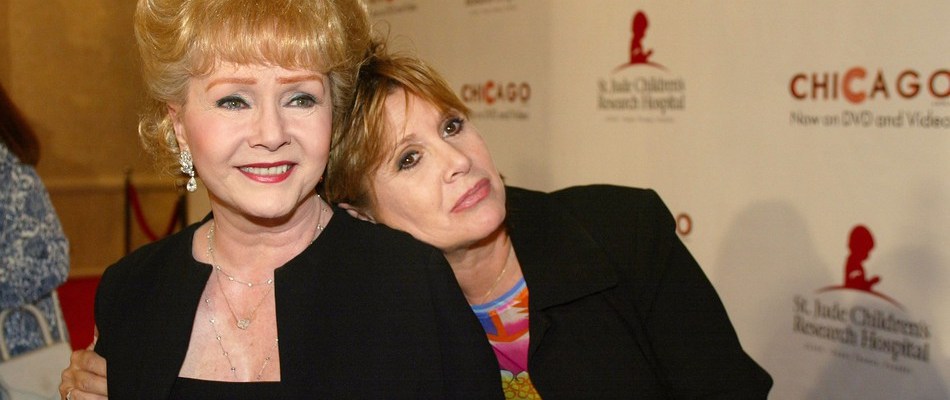
For Carrie and Debbie

In honor of Carrie Fisher and Debbie Reynolds, I have something to say.

Death is part of the story. It’s not the end of the story. Sometimes, it’s not even the worst part.

Carrie died the way we all want to die, if we know what’s good for us. Death came to her mid-stride, on her way from one plan to another. She never outlived her ability to do what she loved. Continue reading

Sympathy Shaming

Black and white photo of white hands with black sand on them

Warning: I am getting up on my tree stump for a minute to voice an opinion.

People – you aren’t actually helping anyone when you try to shame others on the internet for not showing enough concern over a death or disaster. Any death or disaster. “You prayed for X but not for Y” is not helpful. Do you know why? Perhaps you haven’t seen the articles that are starting to appear about how that kind of behavior punishes expressions of sympathy and is beginning to foster corporate numbness among us. If you try to show kindness on the internet, someone will tell you that it isn’t enough. You should have shown kindness in dozens of other instances too. Burn out happens quickly – with the disaster and with the criticizers who want to control your response to it. Continue reading

“But Nothing I Can Post!”

A friend wrote on Facebook recently, “There is so much going on in my life, but nothing I can post about!”

Too true. Every moment, something is happening. Someone is speaking, thinking, fighting, playing, singing, crying, praying. All the someones in each someone’s life. My life is a crowd of people, and my mind is a crowd of ideas, and my figurative desk is a crowd of projects and plans. But how many of these things get “posted”?

Social media has made our world SO much more public than it once was. In common with no other generation in human history, it is now possible for us to know exactly when someone on the other side of the planet painted a bookcase or took a shower. We’ve seen the home movies of people we don’t know and will never meet. We’ve commented on conversations it would be physically impossible for us to hear.

Privacy used to happen by default. It wasn’t possible to “tell the world” unless you chanced to be famous and powerful. But it is possible now, and that means that every event becomes a choice – do I share this? Because sharing isn’t something you do with a friend over teacups. It’s something you lose control of instantly, something you can’t ever take back.

We all know how many internet users have no “filters”. People worldwide say things online every second (every millisecond, every nanosecond) that many could never manage to say out loud in front of even a house plant.

There are still people who DO think twice about spreading the intimacy of daily existence all over the social front page. That’s a good thing. But in the face of the implacable deluge going on around us, the choice not to share can feel stressful, burdensome.

Sharing can be a release, but when sharing is, perforce, an international event, it’s often inappropriate, or plain embarrassing. It may violate a confidence, spread a rumor, destroy a career…so much power hanging on such a tiny compulsive action. Tap, tap, tap, click. POW. Busted.

It’s like being the only sober person at a dinner party. The more intoxicated your fellow guests become, the more exhausting it is to remain sober.

But it’s worth the effort. What’s more, it’s worth the effort to remember that the absence of sharing does not connote any real absence. A lack of Facebook posts, a blog that hasn’t been updated, a Twitter silence…all these can and do mask real-life human activity. All of them. No matter how much we know, there will always be more that we don’t know. Always.

-Photo by Rami Al-zayat on Unsplash