Tree Change Dolls – Why We Care

Four days ago, I discovered Tree Change Dolls. When I discovered them, the Facebook page had 23,000+ likes. I checked again at intervals, during the day, and every time, there were about 10,000 more likes. Today, four days later, there are 87,193.

Tree Change Dolls are abandoned in thrift stores, or “tip shops,” in Tasmania, until Sonia Singh finds them and recreates them. They are old Bratz dolls, or Barbie dolls – the kind of toy that make you clutch your head and mourn because all the little girls you know are walking around in a world that does not welcome or cherish womanly beauty.

But then, there is Sonia.

She washes off their terrible makeup, paints natural faces on them, and dresses them in tiny homemade clothes, provided by her mother. The result is enough to bring tears to your eyes. Their little dolly faces are full of joy – even relief? – and they look just like ordinary little girls, ready to play in the garden.

Nearly 100,000 people have watched the news video about Sonia and her dolls (see above). The response to these dolls is fascinating — perhaps especially to an Orthodox observer. The comments on Sonia’s Facebook page are my favorite part – the dolls look happy, the dolls look like my children’s friends, and (the best) “The dolls look like you gave them back their childhood.”

The rapid, overwhelmingly positive (even emotional!) response to these dolls, world-wide, says a LOT.

A lot about toys – who’s selling them, and to whom? How could a Bratz doll possibly be a good idea? Who is the person who thought it was? Why did so many people believe this person and buy the dolls?

A lot about women – women are buying the Bratz dolls, women are hating the Bratz dolls, women are LONGING for Tree Change Dolls for their daughters and even for themselves. Women are still, after centuries, struggling against the disintegrating apathy of that losing fight to be equally human, equally valued in their natural state.

A lot about problems – what Sonia is doing seems simple and obvious, now that she’s thought of it and showed us how she did it. How can the weight of a cultural trend become so heavy? If we are so relieved to see it shattered, why did we allow it in the first place? Why didn’t we all think of this, on the very first day the very first Bratz doll came out?

But perhaps the most thought-provoking response came to me from someone I know, who said, when he heard about the dolls, that it’s not so easy when it’s a person — not a doll — that you’re trying to rescue. We all want the darkness washed away, don’t we? You’d think so, until you actually tried to help someone who needed the help.

I don’t argue that. Not at all. I don’t ever forget that if solving the problem were simple, the problem would already be solved.

I think that explains the powerful response to Sonia, rescuing one little doll at a time.

We wish it could happen for us that way. We wish we could heal our loved ones so simply, so gently, and so completely. We wish that we ourselves could be so well healed.

So we click on Sonia’s video and watch her do it again – watch her wash the make-up off the tiny face, paint the eyes, and the smile, and the freckles, watch her mom knit the tiny sweater and sew the tiny skirt, and we see the recreated doll sitting in the grass in Sonia’s garden. Sitting there for all of us who wish we could make it to that place ourselves. Clothed and in our right mind. In the garden.

Never confuse the person formed in the image of God, with the evil that is in him; because evil is but a chance misfortune, an illness, a devilish reverie. But the very essence of the person is the image of God, and this remains in him despite every disfigurement.

— St. John of Kronstadt
Fear is a bad decision-maker

Fear is a bad decision-maker. It’s powerful, plausible, and thoroughly unreliable. It’s as likely to lead you straight into the fire as it is to save your life. Fear is as physical and blinding as hunger – necessary for your survival in rare, simple instances, destructive in all others.

The most dangerous thing about fear is the relief we experience when we give in to it. This relief feels like the solution to a problem, like a miraculous escape. It tastes so good, we can’t believe it’s not good for us. But the more we give in to fear, the more we experience this relief, the more the relief becomes an end in itself. The fear grows stronger as we give in to it more frequently, and the relief becomes more and more powerful, more and more necessary. Soon, the relief is the good for which we strive in every instance. Actual good is no longer our objective. But in the clutches of that flooding relief, we don’t notice the absence of good. We think we have achieved it – done the only possible thing, the only rational thing, the one thing that would save ourselves and our loved ones from the abyss.

Fear masquerades as “best practices” in many fields in our society. It presents as good nutrition, good parenting, good teaching, good relationship choices, good medical advice. The masquerade is possible because this is a fallen world. The reason fear is so difficult to combat is that there are many fearful evils in our world. Bad things happen to good people. We can’t understand why. We can’t cope. We long to prevent this evil from touching us and everyone we care about. And whenever someone questions our fear, we point at all the evils in the world. See, we say? If you aren’t scared, you must not be paying attention. Fear is the only smart response to reality.

But like all addictions, fear removes every shred of evidence that doesn’t support its power. It seems like such a natural response in this fallen world that we think it actually IS the good decision-maker it pretends to be.

So how can you tell if you are making a good decision or buckling under the weight of your anxiety?

There are three ways to know.

First, fear is selfishness that presents itself as unselfishness. For example, your fear makes you prevent your child from engaging in some activity that most ordinary children participate in every day. It’s not immoral. It’s not life-threatening. It’s just something you weren’t prepared for or haven’t come to grips with yet. Your fear tells you that you are protecting your child. In fact, you are protecting yourself. You are pursuing that surge of relief you get from giving in to fear. That story about protecting your child is what you need to tell yourself to make the addiction possible.

Fear is not love. Fear is fear. Love, real love, is stronger than fear, and it will bear the suffering of fear for the sake of the loved one.

Fear is especially un-loving because not only does it deprive the child of whatever activity you couldn’t handle, but more importantly, fearful decision-making trains your child that fear is a good decision-maker. It trains your child that nothing is more important than what you are afraid of. That’s how anxiety is passed from one person to another. Anxiety is more infectious than chickenpox.

Second, fear thrives on the illusion that you can conquer death. This is the essence of the drug that is fear. If you just live in this country, eat this food, do this exercise, avoid that person, travel on this road, you will escape all the dangers in the world. We all know intellectually that, some day, we will die. But there is a pervasive message in our culture that we can actually avoid death. We can push our research and our techniques farther and farther, and eventually, we’ll get far enough. We’ll stop dying and live forever.  We love this thought. We want it. We think we need it.

But do we need it? Where does Christianity come into all of this?

That’s just it.

Christianity doesn’t come into it.

The third way you know that fear is driving you is that God isn’t part of the equation.  Fear leaves no room for a relationship with the actual God. Fear is a replacement for God.  It’s too scary to keep serving Him.  We might still pray to Him, but it has no more meaning than crossing our fingers. It’s just something we do in case it works. This is the ultimate proof that fear is a lie.

No matter how fearful we are, we can’t conquer death. We can’t escape the sorrow of our fallen world. But if we have God, we can live with death and sorrow, and we can love in spite of them.

Only one Person can overcome death, and He used death itself to do it. Maybe that’s why the announcement of His birth began with the words, “Fear not!”

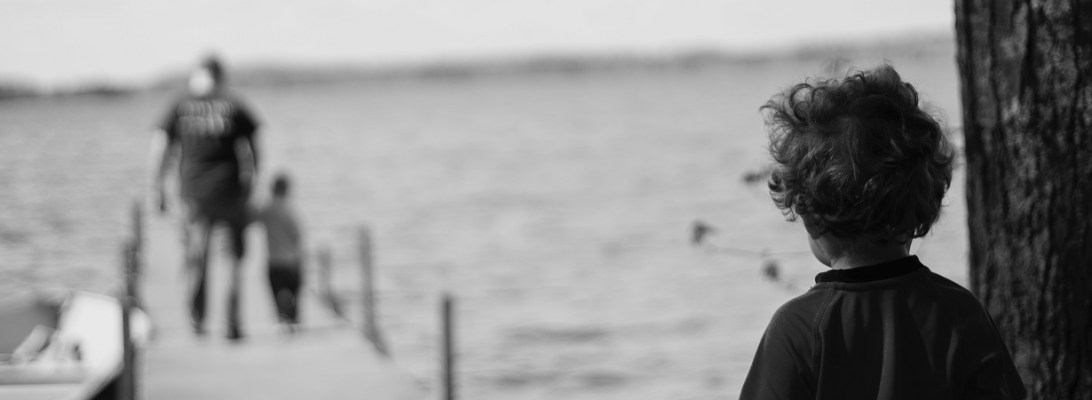
-Photo by Katherine Chase on Unsplash

Saint Porphyrios on Blackmailing God

Bargaining with God in prayer is such a common human behavior that it’s part of our culture. How many times have you seen a character in a movie, hands clasped, drenched in tears, promising, “God, if you will just [fill in the blank], I promise you I’ll never [fill in the blank] again!” Scenes like this appear in novels too, and many of us have caught ourselves doing something like this in real life. “I know I haven’t been to church recently, but if you help me with this, God, I promise I’ll go to church every week.”

Sometimes bargaining happens because we’re trying to get out of the consequences of a bad choice. We are, in essence, asking God to overlook our mistake just this once, get us out of it, and accept as His “reward” our promise that we won’t make this mistake again. This attempt at escape makes several interesting assumptions – not the least of which is that God, staring at us in the midst of our self-made disaster, believes us when we say we won’t do it again.

But perhaps more often, bargaining happens when we are struggling on the brink of despair. We are grasping at what we perceive as our only hope – Divine intervention and protection. This is a good impulse in many ways. God is always our hope and our protector. But desperation can be short-sighted.

As Orthodox Christians, we turn to the saints and fathers of our faith to help us when we can’t solve what confronts us. Their long, long sight into the life of the human spirit can help us resist despair and relax in hope.

For example, read what then-Elder Porphyrios said about bargain prayers and God’s “secrets.”

We shouldn’t blackmail God with our prayers. We shouldn’t ask God to release us from something, from an illness, for example, or to solve our problems, but we should ask for strength and support from Him to bear what we have to bear. Just as He knocks discretely at the door of our soul, so we should ask discretely for what we desire and if the Lord does not respond, we should cease to ask. When God does not give us something that we ask for insistently, then He has His reasons. God, too, has His ‘secrets.’ Since we believe in His good providence, since we believe that He knows everything about our lives and that He always desires what is good, why should we not trust Him? Let us pray naturally and gently, without forcing ourself and without passion. We know that past present and future are all known, ‘open and laid bare’ before God. As Saint Paul says, ‘Before him no creature is hidden, but all are open and laid bare to His eyes.’ We should not insist; such persistence does harm instead of good. We shouldn’t continue relentlessly in order to acquire what we want; rather we should leave all things to the will of God. Because the more we pursue something, the more it runs away from us. So what is required is patience, faith and composure. And if we forget it, the Lord never forgets; and if it is for our good, He will give us what we require when we require it.

God has His secrets, His reasons, the tender wisdom of love that sees all, knows all, and gives all, according to the season, for all our needs.

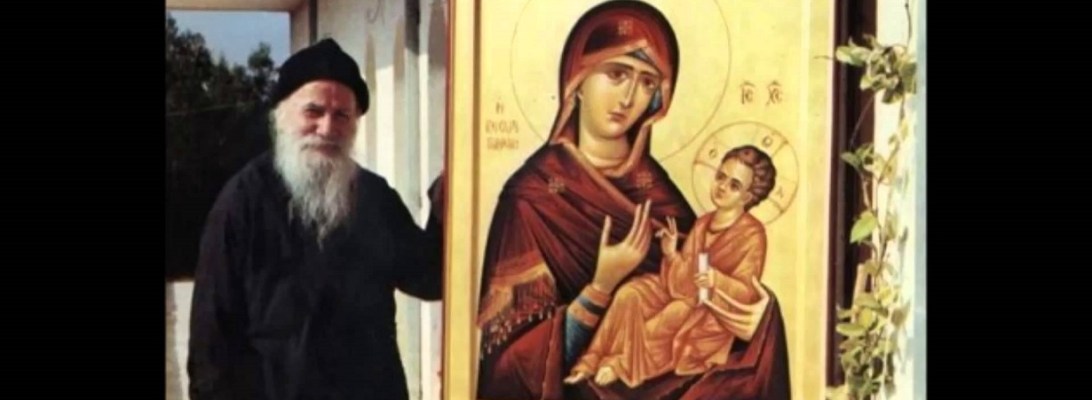
-Photo from a recording of St. Porphyrios praying the Jesus Prayer