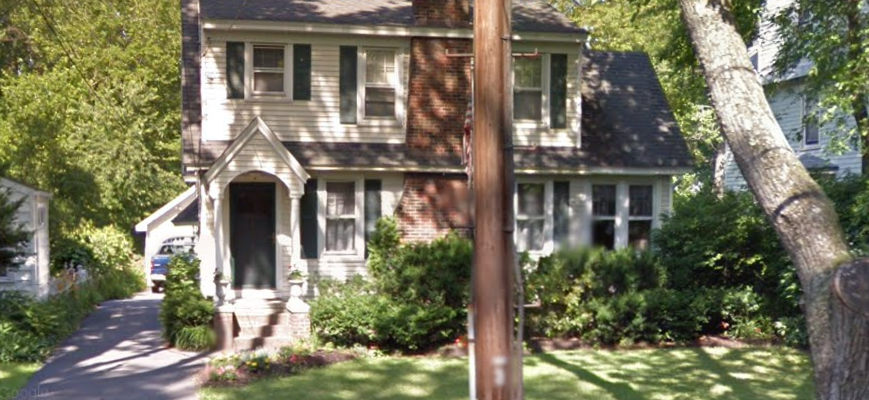
Walking Down the Drive

Once upon a time, when I was little, I went outdoors on a summer afternoon. I walked down the long driveway, from the backdoor of our yellow house, past the garden and the swingset, toward the garage. As I walked, I heard my own voice inside my head, telling the story of what I was doing. I knew the story stretched back to my beginning, and that I was just noticing it, not beginning it. I knew the story was happening still, and that it would keep on happening, as long as I kept on telling it. Continue reading

Fiction Is Like Carrot Soup

Carrots

“So, is this autobiographical?”

“I think this character is my aunt.”

“Was it that boy you dated senior year?”

Each time I write a book, its publication brings on a flurry of questions. The questions happen because the books are fictional, and I’m beginning to think there’s something about fiction that doesn’t make sense to us as human beings.
Continue reading

Illustrating the Story

Several colors of paint and a paint brush in a dish on a paint splattered drop cloth

My next book, Shepherding Sam, is coming out in October of this year. Hooray! The words are finished and out of editing. Conversations with the illustrator have begun. I love this part, but it also prompts a brain dance with me, and the brain dance goes like this.

When I wrote the story, I saw it all in my mind’s eye. I didn’t see it as pictures drawn by an artist. I saw it the same way I see the deck, the Japanese maple, and the telephone wires outside my window. I saw it as real. More real than a photograph, which only has two dimensions. I wrote the story that I saw, but of course, I didn’t describe every person, place, puppy, and tree leaf in exact detail. I didn’t describe much at all. I just told the story. So every reader will have to fill in the faces, the leaves, and the puppy, and the illustrator will help them.

But wait!

The illustrator hasn’t SEEN what I saw. Nobody has. Only me! Continue reading

God Writing

Writing makes me think about God. Imagine writing a chapter. What’s in it – characters, plot twists, setting, subtext? Planning goes into that. Word choice. Looking at the other chapters. Thinking how you’re moving the action, developing the characters. But then, look at one day of your real life. One. What’s in it? SO many characters playing roles you know little to nothing about, and every one of them has an entire lifetime full of meanings and memories you know nothing about, and you and these other characters are interacting with each other, with yourselves, with your multi-faceted setting, with time, space, memory, love. And the collective intelligence and imagination of the human race to date has not come up with a way to predict what will happen in the next chapter.

Immensity.

-Photo by Jacek Dylag on Unsplash