Where to Buy Orthodox Children’s Books

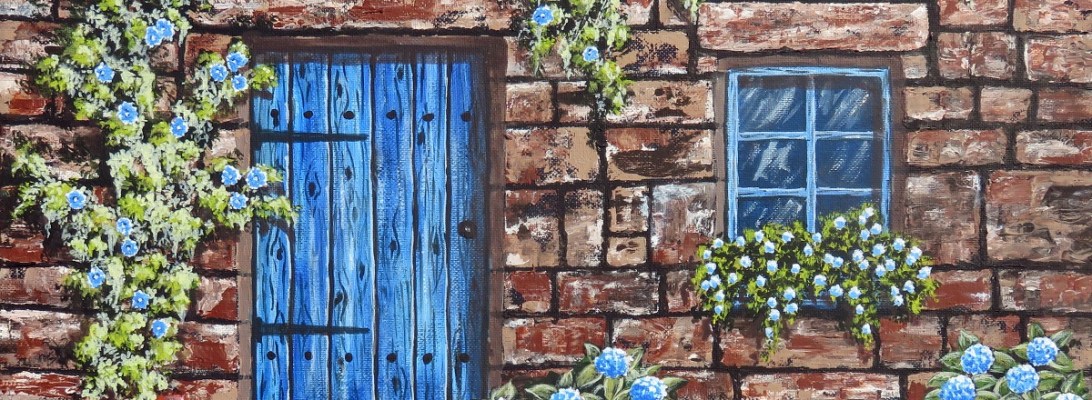
I’d love to browse Orthodox children’s books in a cozy stone cottage. Sunlight would gleam through the mullioned windows, and the books would be neatly arranged on a home-built wooden farm table. Kittens would scamper under foot, and the breeze would bring garden scents through the open half door.

In real life, I’m thankful that Orthodox children’s books can be purchased in a variety of places, for those who never find the stone cottage of my imaginings. Most book sales occur in one of three ways, and I’ll discuss the benefits and limitations of those options here.

AMAZON

You know that’s the first place that came to mind. Isn’t it always?

Yes, you can purchase many Orthodox children’s books from Amazon, even some that may be out of print. Behemoth that it is, Amazon can offer you every amenity, free shipping, high speed, and considerable selection.

BUT…

If you have a choice, Orthodox publishers and authors agree – we’d rather you bought our books directly from the publisher. Amazon takes a bite out of every sale, and that reduces the payment to the publisher and author. One of the most powerful ways to support the genre of Orthodox children’s literature (and it needs our support now as it’s beginning to blossom) is to pay the people who create it directly.

Your Parish Bookstore

This is a wonderful option, although it’s not available to everyone. If your parish does have a book table or bookstore, make that your first stop when shopping for Orthodox children’s books. Your parish likely has a wholesale account with one of the Orthodox publishers. That means they purchase the books at a discounted rate and then resell them to you at the recommended retail price. Your purchase is thereby supporting your parish, the Orthodox publisher, and the author. Not only do you get a beautiful, faithful book for your little one, you have the satisfaction of supporting three good causes at once!

Direct from the Orthodox Publisher

Full disclosure: as you know if you follow this blog, I work for an Orthodox publisher! But I’ve also been published by two other Orthodox publishers, so I know this little world very well and can tell you that the companies who inhabit it are all worthy of your attention.

Perhaps the most wonderful way (other than that imaginary cottage) to purchase Orthodox children’s books is directly from the publisher. You’ll have access to their full selection, their dedicated customer service team, and other useful and beautiful Orthodox books and products in their webstore. Below is a list of Orthodox webstores hosted by these publishers.

  1. Ancient Faith Store: This one comes first because I work for Ancient Faith and have been published by them many times. In my view, they are the biggest thing on the Orthodox kidlit landscape. You can find their children’s department HERE.
  2. SVS Press Books: I’ve got one board book published, one at press, and a third just contracted with this publisher. Historically an academic press, they’re reviving and expanding their children’s line, which is exciting. See their children’s department here.
  3. Park End Books: Park End is the publisher of my recent middle-grade novel, Little Lost Nun. Although they publish a variety of genres, they are extremely Orthodox friendly. You’ll find children’s books in their shop here.
  4. New Rome Press: Books from New Rome are always beautifully produced! You can see their children’s books here.
  5. Potamitis Publishing: This family-run company has an astounding line-up of books about saints. I especially love their Paterikon for Kids. Those colorful little paperbacks are a godsend for little ones who struggle to focus in church. You’ll find these and other books from them here.
  6. Sebastian Press: This is a Serbian-American publisher on the west coast. At least one of my friends has been published by Sebastian, and you can find their children’s line here.
  7. Exaltation Press: This is a newer publisher, offering illustrated catechetical books for children. See their collection here.
  8. Philotheia: This is Kristina Tartara’s shop! She’s the illustrator of my three SVS Press board books and a good friend. You’ll find those books and her own board books, in addition to her other creations, here.

The 8 publishers listed above are well-known, but they’re not the only Orthodox children’s book publishers. Some, like Potamitis, offer their books in multiple languages, and of course I haven’t included Greek, Russian, and other international publishers because my knowledge of them is limited. I do know of one in Romania – Libraria Sophia, the publisher of the Romanian edition of The Barn and the Book.

I’d love to hear from you if you have publishers to add to this list! The more we share their names, the more their books will find their way into the hands of the children for whom they were created. May God bless the work of our hearts and hands!

Featured image by David Clode on Unsplash

Orthodox Publishers and Non-Orthodox Books

In the years since I’ve been involved in Orthodox publishing, I’ve seen numerous writers who hoped to publish a book that would reach the non-Orthodox. This isn’t unique to us. Christian publishing in general has this hope, and it is not entirely unfounded. But the vast majority of people who read Christian books of any kind are already Christian, or well on their way to becoming so.

This is not to say that when you write for an Orthodox audience, you should be inward looking and lean heavily on references and thought lines only your fellow Orthodox would understand. Clarity and kindness are always essential.

It is to say that if you want to write a book that is not intended for an Orthodox audience, you need to think seriously about why you are sending it to an Orthodox publisher.

Let me say that again.

You need to think seriously about why you are sending it to an Orthodox publisher.

Orthodox publishers have Orthodox customers. Their distribution network and marketing apparatus are designed to convey Orthodox content to Orthodox people, or to those strongly interested in Orthodoxy.

People who are not Orthodox and not currently interested in becoming Orthodox do not buy books from Orthodox publishers.

But there are other, larger flaws in the belief that covertly Orthodox and overtly noncommittal books are good publishing, or good evangelism. I’m reminded of that interesting period when many mainline churches in the USA instituted “contemporary worship” to attract young people and newcomers. In parishes, and in publishing, this amounts to bait and switch.

The religion itself is unchanged. Whatever you felt should be hidden or glossed over to make it more palatable to the uninitiated has not gone away. You’ve simply moved it further down the line, and when it reappears, you’ll face uncomfortable questions about why you felt the need to hide it.

Sincerity is a moral imperative, but it’s also a best practice when creating faith-based media. With that in mind, let’s drill down to four basic questions to ask yourself when considering an Orthodox publisher for your book.

  1. What is this publisher’s target audience?
  2. What is my target audience?
  3. What about me as an author makes me appealing to this publisher?
  4. What makes this publisher appealing to me as a writer?

The Publisher’s Target Audience

In the age of niche marketing and boundless content propagation, publishers excel when they serve a well-defined market. (This is true for other types of business as well.) They may publish books on a variety of topics, but you’ll be able to see common threads, a worldview or mindset, a branded look, that indicates who they expect will purchase and value their books.

Orthodox publishers publish Orthodox books. Some will be straight theology, some will be applied, and some will be fiction. But all will assume an Orthodox worldview, or at least awareness of that worldview, in the reader.

It’s absolutely possible for a publisher to reach readers outside the target audience. But this is more by the workings of providence than anything else. I remember reading once that the only way to expand beyond your niche market is to fill it first. A cup overflows when the water has filled every available space inside.

There are several ways to determine the audience a publisher hopes to reach. The simplest is to look at their website or catalog. What kind of books are there? Who are the authors? What do the submission guidelines say? What books seem to be getting the most attention and space on their website?

Think about the book you have in mind. Can you imagine it on their website? Would it fit in with the other books there? Would the publisher agree that it fit in?

All of these questions should be asked for any kind of publishing submission, not just those to an Orthodox publisher. But the answers should clarify whether your book is actually the type they would publish.

Your Target Audience

As you consider the publisher’s target audience, you’ll also be thinking of your own target audience. When you wrote your book, who were you talking to? Who will enjoy your book or benefit from it? Who buys books that are similar to yours?

Side note: If you believe there are no books similar to yours, ask yourself why that is. It’s a complex question. Does your book meet an unmet need? Or, does nobody publish books like this because nobody wants them?

The more specific you can be, in your own mind, about your target audience, the better. Again – you have to fill a niche before you can reach beyond it. Your writing will be stronger, more insightful and directed, if you know exactly who wants to read it.

Second side note: Remember, a target audience comprises people who want to read your book. You may think they need to read it, but yours is not the opinion that counts.

Once you’ve identified your target readers, compare them to your chosen publisher’s target audience. Are you trying to reach the same people?

If you are trying to reach Orthodox readers, an Orthodox publisher is the way to go. Orthodoxy is itself a niche in the Christian world, especially in the United States. Religious publishing is segregated by faith group, and most religious publishers are unlikely to publish materials espousing a different faith or denomination, both for marketing and for missional reasons.

If you are trying to reach non-Orthodox readers, your target audience probably doesn’t align well with an Orthodox publisher’s target audience. If your work is evangelical, you might find you’d be preaching to the choir. If the people you want to reach are truly “outside the dome,” there’s a good chance they’re also outside an Orthodox publisher’s community of readers and customers.

Appealing to the Publisher

When a publisher acquires your book, they’re also acquiring a professional relationship with you as the author. Don’t forget that you and your credentials are reviewed in any acquisitions decision.

It’s common for Orthodox publishers to publish Orthodox writers, but it’s important to understand the ways that Orthodoxy is and is not a credential for publication. The quality of your writing is the first criteria for publication. You won’t be published simply because you are Orthodox and other Orthodox people aren’t writing on this topic.

However, if you are a good writer and you’re writing on a topic that hasn’t been covered by other Orthodox writers, that’s a selling point. Maybe there are thousands of books on improving your marriage, but if there are only a few Orthodox books on improving your marriage, you have something unique and valuable to offer.

That said, if you are trying to write a book that would be unique in the Orthodox world, remember that it may not be unique in the larger world of Christian or secular publishing. An Orthodox worldview isn’t usually a valued credential “outside the dome.” The very thing that makes you a good prospect in Orthodox publishing may be a handicap with other publishers.

Appealing to the Writer

As an Orthodox writer, it’s tempting to submit everything you write to an Orthodox publisher. Perhaps you’ve published other books with them, or you know someone one staff. It feels like home, like a safe place. That’s understandable.

There’s also a temptation to feel that you’re more likely to be published by an Orthodox publisher than by a “real” publisher. Let that thought go.

Orthodox publishers ARE “real” publishers. They’re not operating from a place of desperation, whatever may have been true in the past. Every year, they receive more submissions than they can publish. Readership and sales are expanding. Many of the books published 20 years ago wouldn’t make the cut now, or would undergo a lot more editing before they did!

It is what it is

These questions and answers all add up to the same thing: Orthodox publishers seek to publish excellent Orthodox books. If that’s what you have to offer, your chances are good. If your book is excellent, but not really Orthodox, it’s time for some soul searching.

Not every book has to be Orthodox, or even about faith at all. As an Orthodox writer, your faith will always be part of your lens, part of your consciousness. But how much it shows in the finished product depends on many factors.

The important thing is to be true to your purpose. Pick a side. Take a stand. If you want to reach people for Christ, don’t hide Him.

Video Story: Ferdinand and the Geese

A few free minutes and some curiosity drove me to play with Canva, and voila! Here’s a tiny story, based on my doggy’s enchantment with Canada geese.

For the sake of historical accuracy, I must point out that the real Ferdinand is a tricolor. But not being an illustrator, I chose clip art with a good corgi expression, despite the fact that my dog is not brown.

It’s just over 1 minute long. Enjoy! #honk

Without Your Consent

Can we stop saying “Nobody can make you feel inferior without your consent”?

That’s not empowering. That’s pain-shaming.

It’s also a load of baloney. Sticks and stones may break your bones, but words can break your heart.

Yes, we choose our response to injury, just as we choose our response to affirmation, boredom, opportunity, regret, and all the other facets of human experience. But when we state that a person who feels hurt is consenting to their own injury, we are enabling the one doing harm, not freeing the injured. The perpetrator can now be as hurtful as they desire to be because the pain is your fault, not theirs.

Hurtful words hurt. Hurtful behavior hurts. The pain they cause is real, and it is CAUSED. It comes from the sender, not the receiver.

So let’s stop skipping that part. Before we accept responsibility for our response, let’s assign responsibility to the person and context that made it necessary.

Unhappy Holidays

For what it’s worth:

HOLIDAYS ARE HARD.

We soak up a lifetime of unconscious hopes and assumptions about love, family, success, happiness – and those assumptions crash headlong into reality in moments when we expect to be celebrating.

You are a real person, and if you are reading this, you are not in heaven yet. Neither are the people you know and love, or the people you are related to and can’t stand. Neither are the people posting pictures of the life you wish you had.

Earth is the struggle place. If you are struggling, good job! That’s what we’re here for. You are not a loveless ugly failure. You are a human being, created in the image of God, doing the work He is granting you on your journey to grace and joy.

On earth, we catch glimpses. Minutes, or even seconds of light and relief.

Keep your eyes open for the brightness that finds its way through the cracks around you. Rest in that love for the moments when you can see it. Then pick up your tools and get back to work.

No matter what they tell you, no matter what they show you, the people around you are also struggling and waiting.

Against Followership

In a world driven by clicks and likes, I’ve come to deplore followership. The internet, on and off social media, is a fantastic resource. It’s the biggest library the human mind can conceive, conveying ideas in written, spoken, and visual media. But it’s also a constant temptation to comparison and imitation.

How often do you watch a video and decide you need to think like the speaker thinks? How often do you flip through an Instagrammer’s homeschool photos and decide you need to educate your child with the same plans and materials? Yes, these things can be resources, but they can also be an excuse to cede your agency and intelligence to someone more popular, convincing, or attractive than you feel yourself to be.

They call them “influencers” for a reason.

The longer I live, the more I see that people are just people. Even attractive, convincing people are just people. I respect actual credentials. If you have an accredited degree in your field, I’m much more likely to accept the information you are sharing.

But if your credential is the number of YouTube followers you have, I’m frankly not interested. You are a human, and I am a human. Probably, we’re both adults. Like my opinion, your opinion is just that – an opinion. It may be your best effort at putting together the disparate threads of your experience, and I can honor that. But I don’t need to bow to it.

There is only one Person we should be following, and that is Christ.

Little Lost Nun: Video Interview

This conversation was such a joy! Watch me visit with Katie Reetzke from Park End Books, unpacking the stories within and around the story that became Little Lost Nun.

We touched on so many big ideas – the definition of real tragedy, the importance of representation in books for Orthodox children who don’t live in a majority Orthodox culture, the spirituality of children – so many things! I especially loved hearing about the little girl who keep’s her home-made nun paper doll under her pillow. All the ways that children cherish their imaginative memories and bring them into life are precious.

I hope you’ll enjoy watching this interview as much as we enjoyed making it. You can find a copy of Little Lost Nun wherever books are sold.

What we want from Orthodox children’s books

Almost always, an adult is the starting point for a child’s exposure to a book. We choose the books, we purchase the books, we pack our offspring into the minivan and herd them into the children’s section of the library. They can’t obtain books without our help, so we play a large role in their encounters with literature.

That being so, it’s interesting to reflect on the assumptions and wishes that prompt an Orthodox grownup to reach for a particular book. What do we expect from “Orthodox kidlit”? There are many specific answers to that question, but here are three underlying ideas that I suspect are present when a book is invited into your child’s world.

It’s trustworthy.

If a book purports to be Orthodox, it must meet certain standards. You would be stunned to discover it was championing heresy, of course. But there are other, more subtle expectations. You expect it to support your child’s faithfulness, to offer good theology in simple terms, to help you out as a parent. Sometimes we offer a book to our children because we hope it will do a better job explaining than we could, or will at least make a change from our own voice constantly telling them how to be good. We expect the author to be “on our side,” sharing our motivation to pass on the faith to the next generation. If you’re writing Orthodox kid lit at all, you must be a member of the team that walks each child from the baptismal font to a fruitful Christian life when they reach maturity.

IT’S ENGAGING.

To be honest, parents are constantly being let down by books. Sometimes this happens because parents and children are human beings, and what they find appealing and compelling differs. Your child might not see what you see or hear what you hear in the story. But sometimes a book lets you down by failing to present concepts or adapt packaging to meet the needs of the target age. A child’s heart can’t be engaged if you’ve failed to accommodate her developing brain.

I’ve also learned, in recent years, that we adults can frustrate children by overexplaining. They quickly perceive that we don’t see them as capable of perception and discovery. The old advice to writers, “Show, don’t tell” could be a motto for adults interacting with children. I’m thankful for a recent conversation with my friend Sarah, who spoke eloquently about the importance of approaching a child as a full human, a whole person. Drawing on this wisdom, I believe a good book brings the child into experience directly, sparing them the tiresome process of being prompted to enjoy second-hand knowledge of someone else’s transformative delight.

It’s well done.

By this I mean something other than the quality of the book’s content. Like many new things, Orthodox children’s literature as a genre began life looking a bit “home-made” and frankly unprofessional in some instances. When you begin to do something no one has done before, your early attempts will be amateur and faulty. It’s the nature of new things, and it’s an honorable kind of failure, in my view. You have to start somewhere, and you have to make all the mistakes to propel the endeavor to higher levels of achievement.

But I’d posit that the exemption for new effort has expired for this genre. Our readers and their parents have the right to expect expect high-quality illustrations, well-crafted and well-edited text, good paper, durable covers, and the like. Children learn something from every facet of their daily life, and they will notice if the “church” books always look a little shabby next to the secular books.

KEep trying harder!

With no degree programs and only the beginnings of professional development or support for creators of Orthodox children’s books, it may seem presumptive to demand excellence in this field. But still – we should demand it. Any creative process thrives on concentration and persistence. We should be willing to push ourselves, to ask hard questions of our work and welcome honest answers. There’s a temptation to settle for second best, assuming that because there aren’t many Orthodox children’s books, it’s acceptable to put out work that is “at least better than nothing.” We may unconsciously expect that with smaller publishers and a market defined by our faith group, we don’t have to meet the same high standards that would be applied if we were submitting work to Random House or Harper One.

I reject that mindset.

Orthodox publishers in the United States are growing and changing. Higher standards and the ability to be selective are the natural consequence for companies that are thriving. This is an opportunity for sacrifice, or almsgiving. We can give our first fruits to the Lord, a gift that reflects the best of our ability, a gift that is, to the extent possible to a human maker, without blemish.

Kathryn Reetzke: Orthodox KidLit and God’s Saintly Friends

A warm welcome to guest poster Kathryn Reetzke, who’s sharing some reflections on her upcoming board book, God’s Saintly Friends, illustrated by Abigail Holt.

As a mother of four little ones (6 and under), Church School Director at our small parish in Bowling Green, KY, and a part-time history professor, my passions are rooted in education. Within these roles, I am constantly seeking curriculums and educational resources to use both at home and in Church School. There are a growing number of hands-on and engaging resources for Orthodox families, making it an exciting time to be a parent and Church School teacher. I appreciate all the resources being created by the many individual websites like Orthodox Pebbles, Draw Near Designs, ByziKids, and Sparks 4 Orthodox Kids. Even with the growing number of materials, I believe there are still some gaps that can be filled with meaningful and thought-provoking printed books for kids.

GETTING STARTED

At the beginning of the pandemic shut-downs, I was asked to join an Orthodox Children’s Writers and Illustrators group by Melinda. I was curious to see what ideas were circulating in the behind-the-scenes author and illustrator world of Orthodox publishing. I didn’t realize that by seeking what was missing in the market, I would be called to write a book of my own.

The idea for the board book God’s Saintly Friends came from thinking about available Orthodox books on friendship. I was familiar with some that have characters that are friends, such as Charlie Riggle’s Catherine’s Pascha and the Philo and the Superholies series, but I wanted to think of something that also brought in historic examples of Saints who were friends (history professor hat on).

SPIRITUAL FRIENDSHIP

The pandemic also pushed me to reflect on the importance of holy friends and how we can care for each other while apart. From there I thought, surely saints like St. Perpetua and St. Felicity became friends in prison, both being young mothers and strong in their faith in Christ. I researched and got suggestions from friends about sets of Saints who were friends (such as one of my favorite stories, St. Sophrony and St. Porphryios, from illustrator Abigail Holt). I asked myself: How can I write something that gives both a historical precedence of Saints who had healthy friendships, while also teaching basic values of friendship? After writing my draft, getting editing advice, contacting my friend Abigail about artwork, and two denied submissions, I found a supportive publisher in Park End Books (Summer Kinard), who was equally excited about making this resource available to families.

I love that the availability of Orthodox toddler board books is growing, so that the littlest ones have books to look at during church and more importantly at home. I pray that this book helps parents engage with their children both about the Saints’ lives featured in the book and also about spiritual friendships. The growing experience of friendship through the lens of social media makes early childhood development of healthy friendships key to having healthy future leaders in the Church. This board book is written to appeal to a wide range of ages as the illustrations and text allow for extended discussions about the Saints with older children.

I hope you and your children, grandchildren, and/or godchildren enjoy God’s Saintly Friends together!

NOTE: You can preorder you copy of God’s Saintly Friends HERE.

ABOUT KATHRYN REETZKE

Kathryn is blessed to be a mother of four children 6 and under, an avid reader of both children’s books and adult literature, Church School Director and founder of the nursery program at Holy Apostles Orthodox Mission in Bowling Green, KY, and Adjunct Professor of History at WKU.  She also coordinates the yearly “Room in the Inn” program to help house the homeless in our sanctuary overnight during the Winter months. She has a passion for both education and almsgiving and prays her first book will bring both to our future Orthodox leaders.