7 Serious Questions about Orthodox Children’s Books

The database of Orthodox children’s books in English and currently in print now has over 200 entries. In addition, there are catechetical resources available from archdioceses and other organizations that are not included on the list because I see them as a separate genre. For the moment, I’m not studying curriculum. I’m not qualified to do so, and my primary interest is kidlit. But I qualify that with my strongly held belief that children learn from ALL books, not just the ones adults consider educational.

Research philosophy

Right now at work, I’m researching various aspects of Orthodox children’s literature. It’s a thought-provoking adventure, let me tell you. Questions arise at every turn, and there are moments when I struggle with the wild urge to know everything and fix everything immediately! But as my mama used to tell me, the only way to eat an elephant is one bite at a time. I’m not the solution to everything, and it’s important to remember that people are different. What one person perceives as a flaw is a great strength in the eyes of someone in other circumstances.

Regardless, I believe it’s important to raise and ponder each question. Orthodox children’s literature as a genre is relatively new and still inventing itself. It’s not a field in which you can earn a degree or any kind of standardized credential. It’s still subject to widely divergent opinions, amateur efforts, the absence of substantive data on its efficacy, and the urgency of love – love for the faith and its children and the urgency of their need as an underserved minority in a complex cultural landscape.

Therefore, I offer 7 questions for your consideration. There are others, but in my view, these 7 are starting points for reflection and discussion. You’ll realize quickly that not one of them has a simple answer.

7 Questions

1 – Who is the “customer” for a children’s book: the parent buying it or the child reading it?

2 – Do we hold Orthodox children’s books/curriculum to the same standards that we have for secular children’s products?

3 – Are we evolving from what you might call “informational” catechesis to experiential catechesis, or aren’t we? What’s going on with that and why?

4 – Why is fiction such a complicated thing? Are we able to conceive of children’s fiction as both Orthodox AND engaging? Can we only see or trust faith in fiction if it is OVERT?

5 – I suspect question 1 and question 4 are linked. What do you think?

6 – What do children learn from the ways we create and interact with their “church books”? What are we telling them about their faith that we may not realize we are telling them?

7 – What besides books are/should/could we be creating? What other media might also provide entry points to faithful, imaginative, loving encounters with a child’s spirit?

Share your thoughts

My research is ongoing, and I value glimpses of as many perspectives as are offered to me. If you’d like to share yours, use the Contact form and get in touch!

List of Orthodox Christian Children’s Books

I was thinking of writing an article encouraging homeschool teachers to include at least one Orthodox children’s book in regular language arts curriculum each year. This led to the idea of making a list of children’s books by grade level. And that led to my best effort at compiling a master list of Orthodox Christian children’s books written in English and currently in print.

No doubt I’ve missed some. The world is a big place, and so is the internet. It wouldn’t be hard for a little Orthodox book, or even a little publisher, to escape my notice.

This list will need constant updating if it is to become a lasting and useable resource. But it is at least a beginning.

CLICK TO SEE THE LIST.

The list is housed in a Google spreadsheet. At this writing, there are 182 entries, and I am aware of at least 6 more titles that will release before the end of 2021. That’s a lot of books!

The spreadsheet makes some attempt to include notes on what’s in the books, what they could be used for in a Sunday school or homeschool classroom, or for family reading. That part is very incomplete for the simple reason that I’ve read or even seen only a fraction of these books.

TRENDS I NOTICED

Without reading every book on the list, my insights are limited. Based simply on the covers, blurbs, and other readily available details, I noticed several things.

1 – The number and quality of Orthodox children’s books appear to have increased greatly in the last 10 or so years.

2 – Orthodox children’s literature is largely catechetical.

3 – Fiction is rare.

4 – Books of any kind for older children are rare.

5 – The quality and style of illustrations varies widely.

6 – Board books are relatively new in this market, but they are popular and more are being published.

WHAT I THINK

People want good books to support their children’s faith. The number of newer publishing houses and their offerings suggests an active effort to fill the holes for this market. The larger Orthodox publishers in the United States have expanded and improved their children’s line in the last decade. Also, with the evolution of technology and publishing resources, smaller companies can form and produce professional-quality books for niche markets in ways that were not possible in the past. I saw some books and companies I felt were a direct result of this evolution. This is encouraging. I love to see people spend fruitful effort on what matters to them.

One question kept recurring to me as I worked on the list. How many of these books would a child read spontaneously? Are these books children would choose for themselves? Are we simply producing the kind of book an adult makes you read?

On the one hand, there is nothing wrong with reading books you were told to read because you need to learn the information they contain. This is a healthy life-long discipline we should acquire as children. Every aspect of our spiritual life can sometimes require self-compulsion, and the care and love that has gone into creating the books on this list make them accessible and valuable.

That said, I freely admit I was a child best reached through her imagination. Even as an adult, I often find myself most drawn to things I’ve encountered first in fictional settings. Stories are the way I find and remember meaning.

The books I’ve written for children are all either fiction or creative non-fiction (for example, an incident from the life of Saint Ia, told imaginatively in simple language). I don’t feel qualified to write instructional non-fiction.

I say these things to be clear about my perspective. In my mind, the height of excellence in children’s literature is achieved when some great truth shines directly into a child’s heart through a beautifully crafted, genuinely engaging story. In that context, the distinction between what is and is not Christian literature fades. If you are a Christian wherever you go, you can encounter and ponder your faith in fiction as well as non-fiction.

I know not everyone is like me. I know that many child THRIVE on non-fiction reading. I believe Orthodox children need and want more of every kind of book. When you consider how many secular books a child can read in the course of a childhood, 182 Orthodox books is not many at all.

For my part of the effort, this list urges me to keep working on Orthodox-infused fiction for children. It’s a craft that takes practice. A weak story wobbling under the weight of a catechetical agenda accomplishes little. God grant me strong stories that carry something essential with love and grace.

#SummeroftheLittleLostNun – Sister Mary and Nun Anna

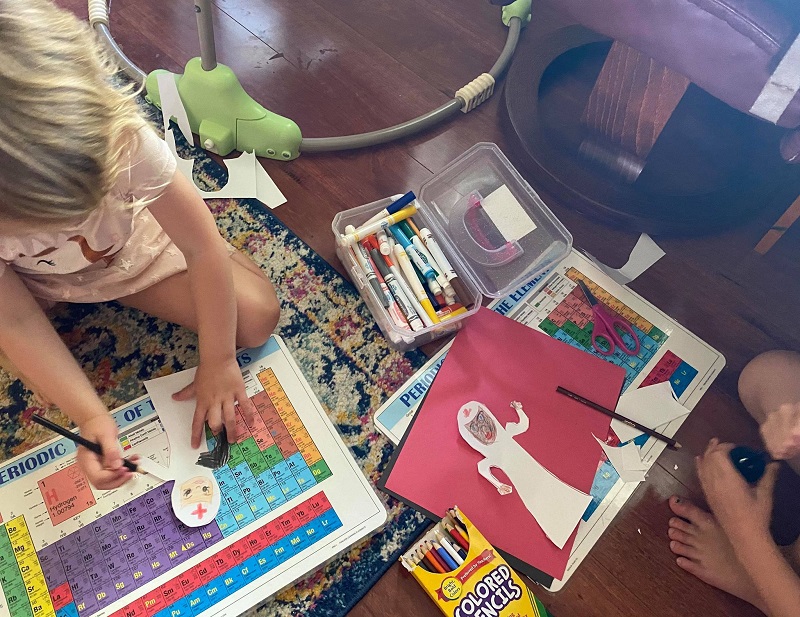
With great joy, let me introduce you to two little nuns and the little girls who made them. The nuns began life on a summer day, on the carpet with markers, colored pencils, and two fascinating copies of the Periodic Table of Elements.

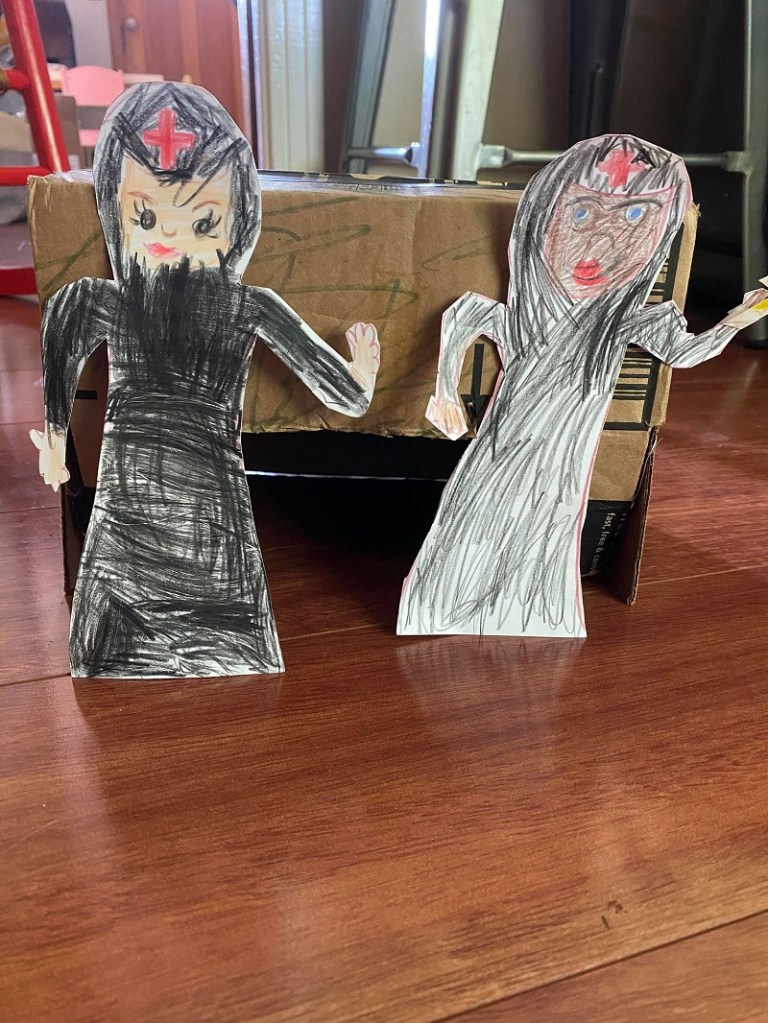
This is Big Sister and Nun Anna.

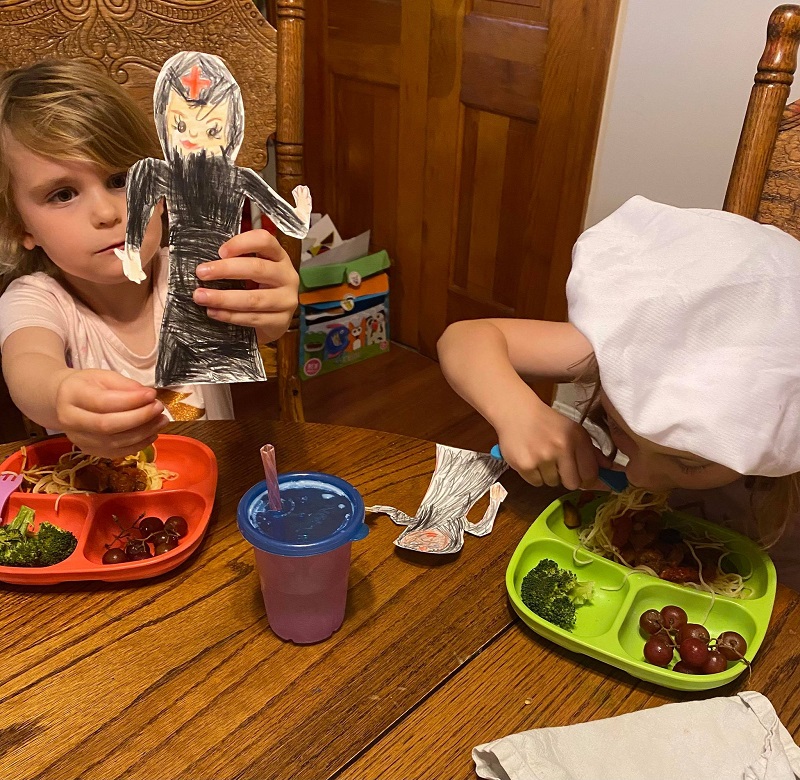
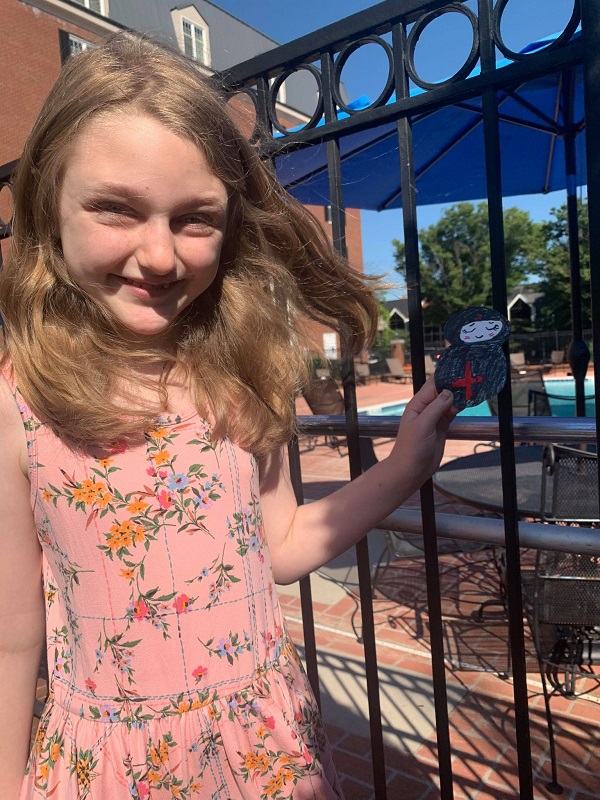
And here is Little Sister holding the nun she made, Sister Mary.

Big Sister built a church for the nuns, so they would feel at home, and Little Sister found icons of the Holy Apostles and Saints Cosmas and Damian to put inside it. Here are Sister Mary and Nun Anna on their way to pray.

Outside the little church…
Inside the little church

Sister Mary and Nun Anna spent a wonderful day with Big and Little Sister. They ate spaghetti, and it is very likely they also ate their vegetables. Nuns do eat vegetables.

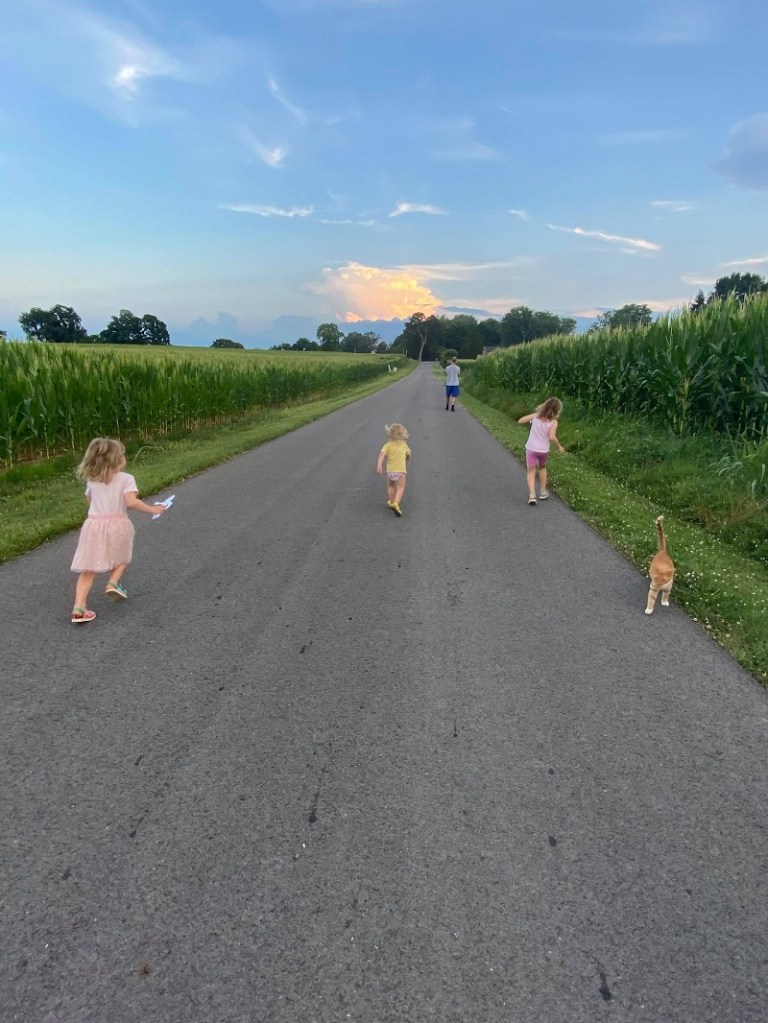
Sister Mary and Nun Anna took the girls on a walk by the corn fields. The sunset was beautiful, and the dandelions were fluffy.

Before bedtime, they visited the bee garden. Nuns like bees and gardens, and you will often find both at a monastery.

Nun Anna visits the garden…
…and probably blesses the flowers.

There was just time for a quick ride down the slide and a good-night pat for the cat.

Wheee!
Good night, Cat!

Thank you, Big and Little Sister, for making and sharing Sister Mary and Nun Anna! This will remain one of my favorite things that happened during my time on this planet.

If you would like to make your own little nun and share her adventures, you can find the directions HERE.

#summerofthelittlelostnun #littlelostnun

Make your own #littlelostnun and share pictures!

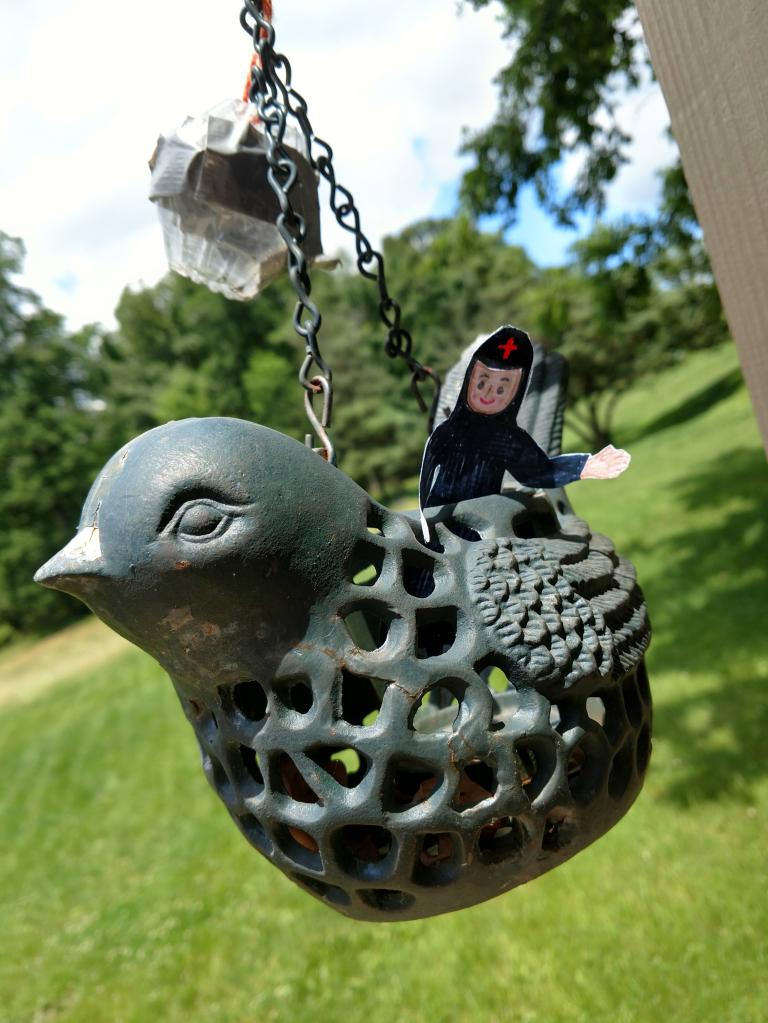
Today, I joyfully announce the #SummeroftheLittleLostNun! Together with Park End Books, I’m inviting children (and grown ups) to draw their own little nun and share pictures of where she goes. Does she go to church with you? On vacation? Is she playing near the creek (don’t fall in, little nun!)? Maybe yours will enjoy the garden. Mine does!

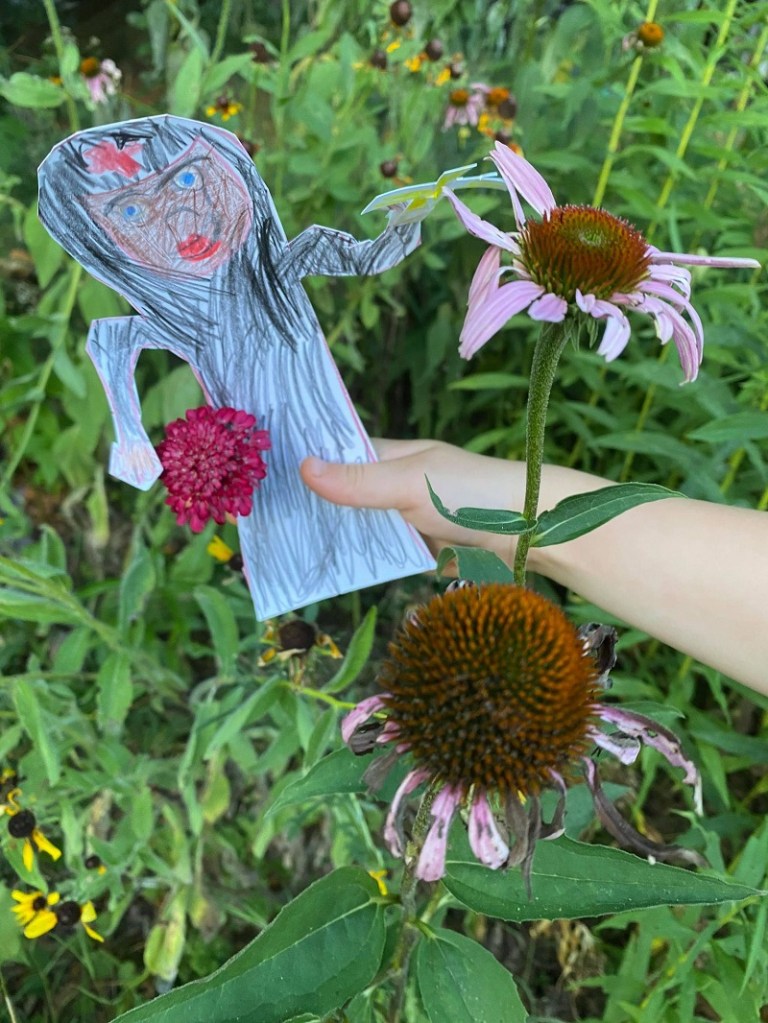
#littlelostnun in the flower garden!

Making Your #littlelostnun

You are very welcome to draw your own nun, paint one on a clothespin, or sew one out of felt or other fabric. Variety is one of the great beauties of creation, and I hope to see variety in these little friends. If you need an outline to get you started, Jack Naasko (an artistic friend) kindly created this downloadable template. Color it in, cut it out, and let the adventure begin!

#littlelostnun goes traveling

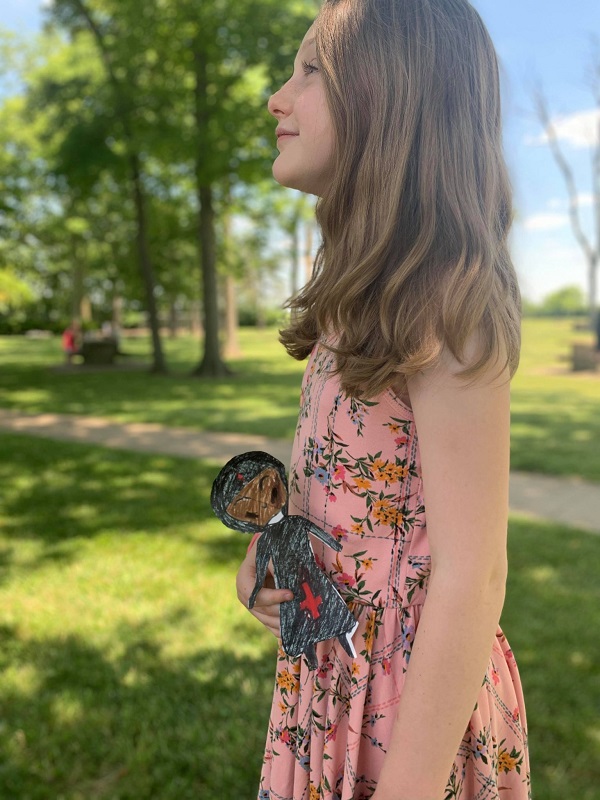
Some friends of mine were traveling recently, and they created little nuns on the road! Here they are, the first people (and nuns!) to participate in #summerofthelittlelostnun !

Just looking at these pictures makes me happy!

How to participate

Everyone is welcome to join in! Here’s how you do it.

1 – Make your little nun. Draw your own or use the template.

2 – Take her on adventures. Take pictures of her wherever she goes!

3 – Share your pictures, and use the hashtag #summerofthelittlelostnun so that everyone participating can enjoy them. You are also welcome to send them to me. I will be publishing as many as I can on this blog! Use the contact form to get in touch or find me on Facebook.

4 – Another reason to send in your pictures? Park End Books will be offering a 10% OFF coupon for everyone who participates.

I can’t wait to see your pictures! May the #littlelostnun find herself in many good places, with good friends!

#littlelostnun #summerofthelittlelostnun #littlenuntravels

Flying!

REMINDER: Little Lost Nun is available for pre-order from Park End Books, separately or together with the limited edition Little Lost Nun Peg Doll! This book releases in August 2021!

#TeachersTalkKidLit – Nancy Parcels

What makes a book a good book? This is something that I have been asked several times by other people and that I have even asked myself.  Having an 8 year old son we have done TONS of read-alouds.  We have had many successful read-alouds and many books that we could only read a few chapters and then we needed to abandon the book and move on.  Why? What made the books that we couldn’t put down a book that we wanted to keep reading?  For us it was a few things.  

RELATABLE

First, the book was relatable in some way.  They were either books about a boy the same age as my son, they had similar interests or were of the same faith.  My son could connect to the character with their struggles, hobbies, or strengths.  This is why we LOVE books that give lots of background information about the main character.  The more my son knows about the character’s likes, dislikes, religious background, hobbies, dreams, or aspirations, the easier it is for my son to want to continue reading to find out more.  

INTERESTING VOCABULARY

The second concept that makes a book a good book for us is unusual or uncommon language.  The more the author uses rare language, the more my son gravitates towards that book.  What I mean by unusual or uncommon language is that it may use words that we don’t hear anymore, like Old English or slang words from different eras.  It produces images and discussions that usually surpass my imagination.  Even books that are Orthodox faith-based books that use vocabulary that may seem advanced for the target age cause wonderful discussions and learning opportunities. 

IMAGERY 

Another way to keep us enthralled with a book is imagery! The more descriptive words used to tell us what is going on with the scene, the better.  It gives my son the opportunity to feel like he is living the book.  Giving the reader the full scope of the scenes gives them the chance to feel like they are standing right next to the characters, seeing the scene play out right in front of them.  We have even read a few illustrated classical reads that don’t have pictures on each page, but the pictures it does have are so detailed that the questions, conversations, and thoughts that it provokes are amazing.  

LESSONS

Finally, we love books that have a lesson learned by the main character.  It can be about anything really.  We have read books on our Orthodox faith, friendships, trusting in God, believing in oneself, etc.  While we read the book, we can have great discussions about what we would do differently or what we think will happen to the main character.  Following the character in their journey helps feel like we are a part of them.  Also this helps tie in having something to relate to and imagery.  Having something that we need to follow along closely with means that we need background information. 

Parent choice vs. child choice

I wanted to touch base on books that I would pick out for my child compared to books he would pick for himself.  The books that I pick for him are usually books that I found to have the content that I am trying to teach.  It could be books that are for our history time period or religious teachings.  I also like to make sure that the books have good written language.  I prefer books that do not have new slang words or inappropriate grammar or language.  If I am using a book to teach or reinforce what we are learning, I also want to make sure that the book is giving accurate information.  Now, the books that my son wants to choose are the complete opposite of what I choose.  He likes books that have tons of pictures, slang, and little to no history.  My son loves graphic novels and what I like to call “silly” books.  That is why when I am reading aloud and picking books that he would normally not choose for himself, I try to find books that have something in there that he likes or I make each character have their own voice.  Just something to keep his attention and keep him interested.  I will also try to keep asking him questions throughout the book to keep his attention or go over something he didn’t understand.  

About Nancy

Hello! I am Nancy Athanasia Parcels.  I am an Orthodox home-educating mom.  I have been home-educating for 6 years.  I have also tutored in Math and Reading on and off for 20 years.  I have taught in a Montessori Homeschool Co-op for several years.  We have switched to a classical home education for the last 3 years.  I have taught for 2 years so far at our current co-op.  I have also worked in a library as a librarian assistant in the children’s section for several years.  I have been married to an amazing Chef husband for 11 years.  We have one 8-year-old son and another son to make his arrival in a few short weeks.  We live in South Carolina where we enjoy nature, family time, learning from each other and reading aloud.  

4 Publishers Accepting Submissions for Orthodox Children’s Books

Do you write Orthodox Christian books for children? Are you a new writer wondering where to submit your manuscript? Are you a previously published writer who needs another outlet for her work?

This post is for you! It’s the information I wished for when I first approached the Orthodox publishing world, and several times since.

As the market for high-quality Orthodox children’s books expands, so do the number of publishing options for writers of these books. Publishers watch what sells to understand what needs are being met, and what needs are being expressed but are not yet met. A book purchase is a vote for the book being purchased and, indirectly, for other books of the same type. This is as true in the Orthodox world as it is in mainstream publishing. It’s encouraging to observe the upward spiral of demand for Orthodox children’s books and publication to meet that demand.

WHY DOES THIS LIST MATTER?

My childhood and my human identity are firmly rooted in the stories I read and loved. Those memories begin before memory. I can’t remember a time without books, without someone reading to me, and then without my own endless adventures through the printed word. I believe faith and imagination are strongly bound, so I want the number of good books – faithful, beautiful, funny, poignant, and beloved – to grow and grow.

In addition, as a writer, I want the blessing of multiple options when it’s time to submit a manuscript. Writers write. We grow, we change, and we write some more. Publishers release a limited number of books each year, and competition for those spots is fierce. The more publishers are accepting submissions, the better chance we have of being published.

BEFORE YOU SUBMIT YOUR BOOK PROPOSAL…

All publishers are different, but in more than a decade of writing books for publication, I’ve learned that some things are consistently true, no matter which publisher you are considering.

1 – Read the submission guidelines. No, really. Read every single word. The company wrote those guidelines to ensure submissions will have the best possible chance of matching their requirements. Do you want the best possible chance? That means knowing EXACTLY what the publisher wants and doesn’t want.

2 – Follow the submission guidelines. Having read the directions, your next step is to follow them. In most instances, the first person who sees your submission when it arrives at the publishing house is an editor. Editors are detail-oriented, educated, word-smithing, book-loving, and generally strong-minded people. They work hard and will bless you for making things easier for them by following the guidelines. The guidelines can also help you discern whether your book is a good fit for the publisher, and whether the publisher is a good fit for you.

3 – Explore the publisher’s website BEFORE deciding to submit. Visit their webstore. Browse the entire collection of books for children, including those they choose to sell that were released by other publishers but focusing especially on their own line up. Be a good observer. Watch for trends. Compare your proposed book with what you are seeing. Does it fit in? Do they already have four other books on the same topic? If you don’t see anything that looks like your book, is that because you would be the first to fill a real need, or because they wouldn’t see a need for your book? Take your time with these questions. You might need the answers as you craft your proposal.

4 – Always have a back-up plan. This piece of excellent advice comes to you from my friend Phoebe at Being in Community. When you submit a manuscript to a publisher, you should be thinking about what you’ll do if the publisher says Yes! But you should also have a plan for that book’s next step if the publisher says No. I’m working on another post about rejection letters, so that’s all I’m going to say about this here.

THE LIST

Here it is! Note – you do not need to be represented by an agent to submit to any of these publishers. The information given below is drawn from personal experience and from contacting the publishers directly. In each case, you’ll find the publisher’s website, a link to their submission guidelines, and some notes on what the publisher is looking for, together with anything I’m able to add from my own experience publishing with them.

Ancient Faith Publishing

This is the publisher I know most about – both as an author and as an employee! I’ve seen the whole publishing process at Ancient Faith from both perspectives. I’ve had manuscripts rejected and accepted by them, and I’ll always be thankful for what I’ve learned from their editors.

You can find Ancient Faith’s submission guidelines HERE. The guidelines include descriptions of what Ancient Faith is looking for and specific directions for submitting each type of book proposal. You can find the children’s section of the Ancient Faith Store HERE. Ancient Faith accepts and reviews submissions on an ongoing basis; there is no submission deadline.

Jane G. Meyer, the children’s book project manager, explains, “We want those projects that have so much Orthodox Christian flavor that other secular or religious publishers probably wouldn’t be interested in them. We also want submissions to come in that have been worked and reworked–that are free of obvious mistakes, and have been edited and revised for style. The stronger a piece is on the first read, the more likely it will move forward in the process.” She adds, “The best way to gauge what books we want is to look at the books we’re currently publishing. Our catalog is a good indicator.” 

SVS Press

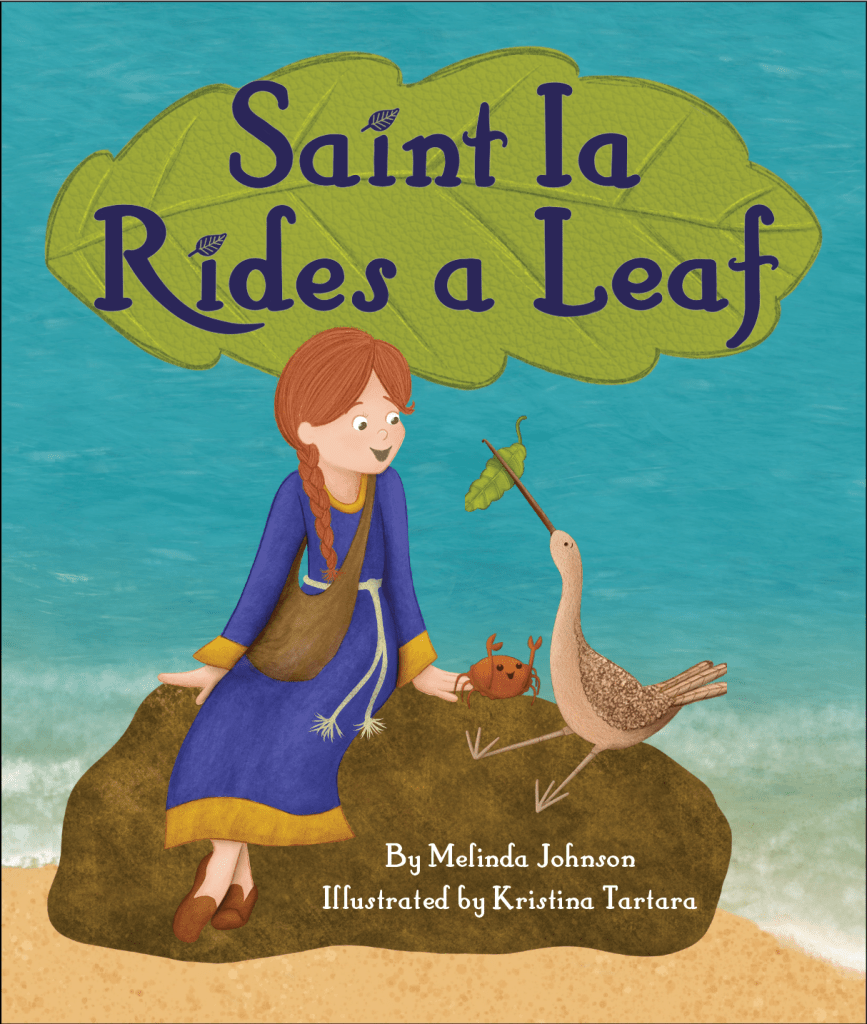
St. Vladimir’s Seminary Press published their first board book this year – Saint Ia Rides a Leaf, by Melinda Johnson (yes, me!), illustrated by Kristina Tartara – and Kristi and I are already contracted for a second board book with them. SVS is returning from a hiatus in children’s publishing. You’ve probably seen some of their older children’s books, many of which are still in print, but this is a season of change and development for them. It’s a fun time to jump into the line up.

You can find the SVS Press submission guidelines HERE. You can see the children’s section of the SVS Press Bookstore HERE. SVS Press reviews submissions at quarterly acquisitions meetings. The dates of the meetings and the deadline for submissions for each meeting are listed with their guidelines at the link above.

Sarah Werner, chief marketing officer for the press, offers this perspective: “SVS Press has long been seen as an ‘academic press’ and we are proud to carry that title into the future. Though, our renewed vision is to not just be an academic press for scholars alone. Our goal is to provide scholarly theological texts, quality translations of patristic writers, as well as quality theological material for ALL ages and walks of life. Our children need quality theological works just as much as adults! We are always looking for Orthodox writers and illustrators who are able to create and tell stories of our faith that are appropriate for little eyes and little ears. We are looking for material that accurately teaches children about our faith and inspires lifelong engagement with and love for God and His Church.”

Park End Books

Park End Books is a newcomer in the Orthodox publishing world. It’s a well-organized effort and already bringing books to market. I encourage you to visit the website to learn more about the company. Its advent is a positive sign of the market’s growth and a welcome new option for writers in search of a publisher. I recently received a contract from Park End for a children’s chapter book that will release in late summer of this year, and to date, I have been thrilled with the process. Summer Kinard, the founder and senior editor, was an author before she was a publisher, and I’ve noticed many aspects of the Park End experience that benefit from her dual perspective.

You can find the Park End submission guidelines HERE. Note that Park End accepts submissions at specific times, so be sure to watch the website for updates. You can see this new company’s growing webstore here.

Asked about Park End’s plans for children’s books, Summer reports, “We are planning three board books for the coming year as well as [my book, mentioned above]. For board books, illustrations are a big deal. We’re commissioning one, and two are from an author-illustrator team with a cohesive style. Our 5-year plan includes getting our books into mainstream bookstores, so we favor books that will reach beyond our target audience of Orthodox readers by tapping a broader cultural need. Our main goals are accessibility and beauty, and we love diverse voices and stories. We’re happy to accept Byzantine Catholic, Western Rite Orthodox, and Coptic Orthodox manuscripts, too, since our niche is meant to bring our whole corner of the church into the public awareness by getting into Barnes and Noble and other bookstores.”

Paraclete Press

Paraclete Press, in their own words, publishes books that present “a full expression of Christian belief and practice—Catholic, evangelical, mainline Protestant, Orthodox…” This means that Paraclete books may reach different readers than some books released by other publishers on this list, and that the staff you work with will be from a variety of faith backgrounds. Paraclete Press published my first board book, Piggy in Heaven, and I found them to be friendly and professional. The finished book was sturdy and adorable.

You can find Paraclete’s submission guidelines HERE. You can see the children’s section of their store HERE.

Publisher Jon Sweeney notes, “Children’s books are essential to our publishing, even though we only publish two or three per year. And we focus mostly on saints, holidays, and seasons of the church year.”

DID I MISS ANY?

If you know of any publisher of Orthodox children’s books who is currently accepting submissions but does not appear on this list, please post that information in the comments. We all want to hear about it!

God willing, this list will be twice as long five years or a decade from now. In the meantime, I wish you the blessing of time and strength to write, patience to persist, and the pure delight of seeing your published books in the hands of happy little readers.

The Best Part of Writing for Children

This.

This is the very best part. I love writing because I’m made that way, and I adore seeing my words illustrated. But my favorite blessed miracle of it all is a little one happily reading a book I wrote.
I love the innocent little beings we are before the world gets to us and the struggle begins. I love the warmth of our better selves that surfaces when we care for children. I love that the veil is thin for these little ones and the flutter of angels still discernible around them.

Perhaps I also love the reminder of my own journey through that little world. The shabby picture books on a shelf in my office, the ragged rag dolls and moth-eaten stuffed animals in a crate downstairs, the old photos in which the incandescent light of home still shines…these are treasures I plan to carry till I lay my burden down. They are a door I like to stand near, treasuring the glimpses I catch when it opens for a moment, reminding me that time is circular and limitless.

The Children’s Hour

BY HENRY WADSWORTH LONGFELLOW

Between the dark and the daylight,
      When the night is beginning to lower,
Comes a pause in the day’s occupations,
      That is known as the Children’s Hour.

I hear in the chamber above me
      The patter of little feet,
The sound of a door that is opened,
      And voices soft and sweet.

From my study I see in the lamplight,
      Descending the broad hall stair,
Grave Alice, and laughing Allegra,
      And Edith with golden hair.

A whisper, and then a silence:
      Yet I know by their merry eyes
They are plotting and planning together
      To take me by surprise.

A sudden rush from the stairway,
      A sudden raid from the hall!
By three doors left unguarded
      They enter my castle wall!

They climb up into my turret
      O’er the arms and back of my chair;
If I try to escape, they surround me;
      They seem to be everywhere.

They almost devour me with kisses,
      Their arms about me entwine,
Till I think of the Bishop of Bingen
      In his Mouse-Tower on the Rhine!

Do you think, O blue-eyed banditti,
      Because you have scaled the wall,
Such an old mustache as I am
      Is not a match for you all!

I have you fast in my fortress,
      And will not let you depart,
But put you down into the dungeon
      In the round-tower of my heart.

And there will I keep you forever,
      Yes, forever and a day,
Till the walls shall crumble to ruin,
      And moulder in dust away!

A Board Book Story of Saint Ia of Cornwall

On Tuesday, December 15, my second board book launched – and it’s the first board book to be published by St. Vladimir’s Seminary Press!

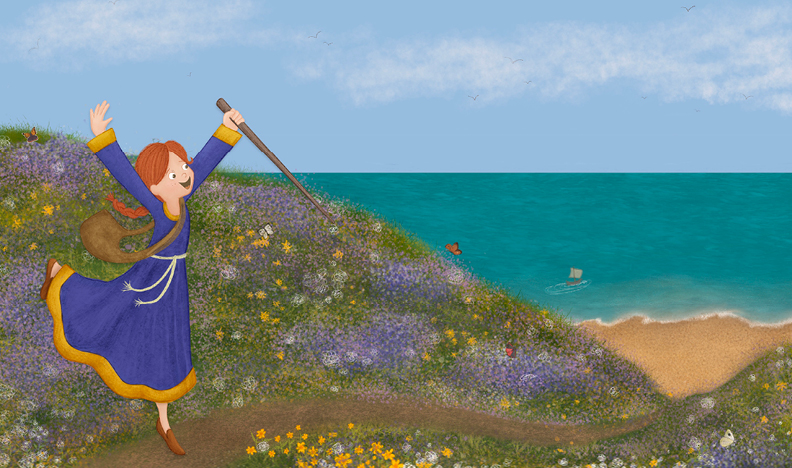
Saint Ia Rides a Leaf is a toddler-friendly retelling of a story from the life of Saint Ia of Cornwall. Children will sympathize with Ia, who was left behind by her friends because they thought she was too young to be a missionary. But something amazing happened, just when she was on the point of giving up.

Who was Saint Ia?

Saint Ia was an Irish missionary to England in the fifth or sixth century. She is believed by some to have been a princess, but the dream closest to her heart was to preach the word of God in England. Ia arrived in Cornwall (spoiler alert!) through divine intervention, and the modern-day town and parish of St. Ives are named for her. In fact, the older Cornish name of the town is Porth Ia, meaning “Ia’s cove.” You can learn more about St. Ives Church here.

St. Ives Parish Church (Photo credit: Palickap)

Making the book

One of my favorite parts of this project has been working with illustrator Kristina Tartara. Her enthusiasm matched mine, and she brought so much loving attention and creativity to the project. For example, it was Kristi’s idea to include the three little friends who keep Saint Ia company in the story, reflecting all her emotions on their expressive faces. Through many conversations, shared research, sketches, and revisions, Kristi brought the story to life.

Kristi also brought her training in early childhood education, not only providing good insight (“That’s too many words, Melinda!”) but also a wealth of lessons, crafts, and activities to go with the book. Check out these free printables, photos, lesson plans, sensory bins, leaf crafts, and more!

SAINT IA’S SONG

A special part of the project that was completely new to me was the SONG! Composer Natalie Wilson wrote the music, I wrote the words, and Natalie recorded it. You can find the sheet music HERE. The recording will be available shortly – I’ll update this post as soon as it releases.

WHAT’S NEXT?

I look forward to seeing Saint Ia Rides a Leaf in the hands of many children, whether they are old enough to pick out words or cuddled up (and probably wiggling) in the arms of those who love to read to them. Like our own lives, the lives of the saints are full of stories – high points and sad days and the train of teachable moments God arranges for us on the path of salvation. I am thankful for Saint Ia’s persistence, and for all the good gifts that come from making children’s books.

Writing board books

Writing board books is a little like math or music for me. I love it! I love gazing at the entire story in my head, and then pouring it into just a few hundred chosen words. And saying the words out loud, nodding along, hitting a pencil to the desk, listening for beat and tripping tongue moments, pressing all the meaning and metaphor and allusion into those few, chosen words. Saint stories are fertile ground for this musical math. Sometimes only a few words of story are known, sometimes there are many and it is a greater labor to fit them into the tiny book. I love doing it.

#NineWhiteDeerandMe